Time25 min prep + about 5 min peas cooking if needed
Makes6 servings
CategorySalads
Tastefully Planned,
Joyfully Cooked.

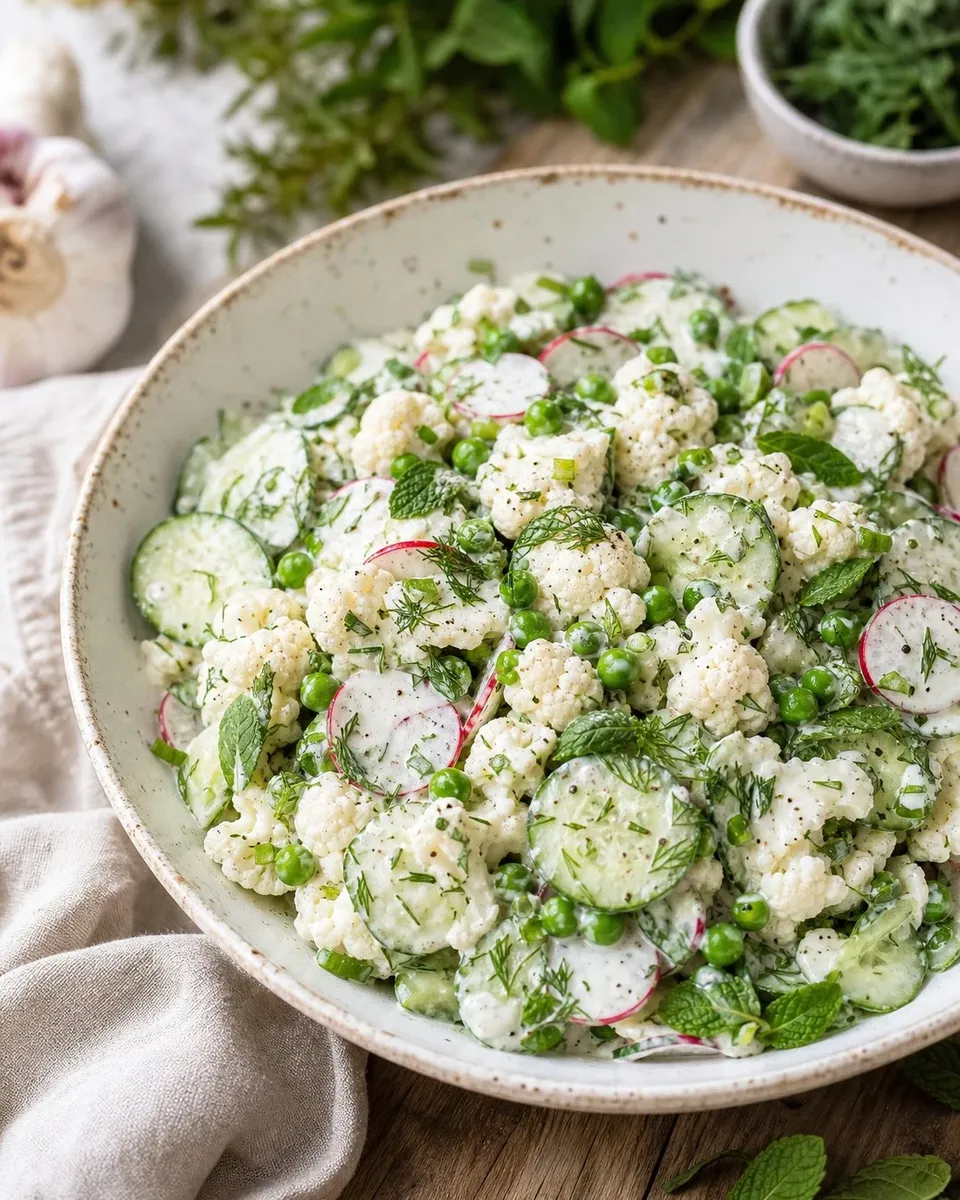
Thinly cut cauliflower, cucumber, radishes and peas in a tangy garlic-yogurt dressing with plenty of fresh herbs.

A salad that starts with the knife
Cauliflower has a very different personality when shaved or chopped small enough for a forkful with cucumber, radish and herbs. Small, even pieces give the salad its crisp, fine texture and make it comfortable to eat by the forkful. A creamy yogurt dressing then coats many small surfaces, so each bite has tang and garlic without needing a heavy layer of dressing. Take a little time with the cutting stage and the rest is straightforward. This is a practical side for a meal that already has a warm main dish, because most of the work can happen before the stove becomes busy.
Choose the vegetables for texture
Look for firm cauliflower and crisp cucumbers without soft spots, since the salad is mostly raw. Thin-skinned cucumbers save peeling, while radishes bring a peppery bite and color. Peas contribute sweetness; shelled edamame changes the flavor and adds a firmer bite. Either should be cooked according to its package if required, then cooled and drained. Do not add hot peas directly to the yogurt dressing, because they can warm and loosen the mixture. Choose either peas or edamame to suit the meal and what is already in the freezer; one is all you need.
Step 1: Slice the vegetables carefully
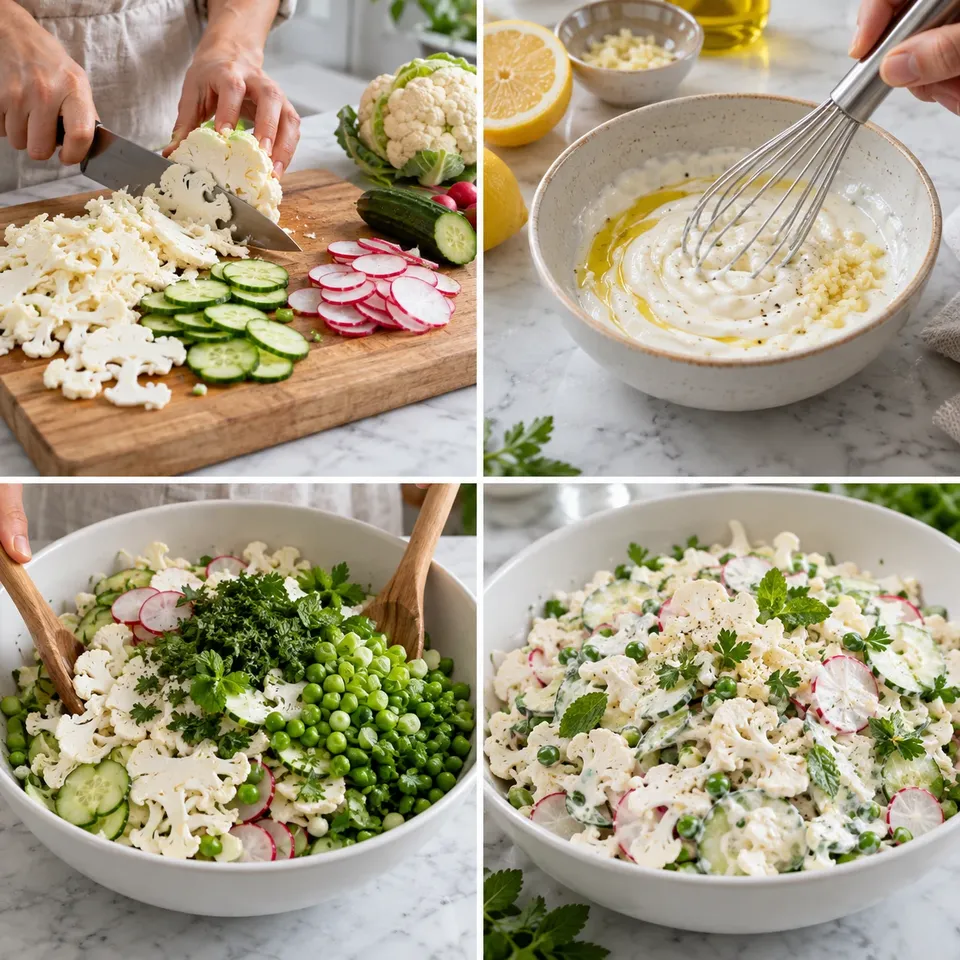
A mandoline makes very thin slices quickly, but use its guard and stop before a vegetable becomes too small to hold securely. A sharp knife can produce an equally useful salad if you cut the cauliflower into small pieces and keep the cucumber and radish slices consistent. Remove a tough central cauliflower core that would stay woody in a forkful. The vegetables do not all need the same shape, but they should be comfortable to eat together. Very large cauliflower chunks with paper-thin cucumber create a less even texture and encourage the dressing to collect in only one part of the bowl.
Step 2: Salt briefly, then drain
The first half-teaspoon of salt goes on the cut vegetables before dressing. It seasons them and encourages a little surface moisture to collect. Pour that liquid away rather than whisking it into the yogurt, especially if the cucumber is juicy. This small drain is one of the best ways to preserve a creamy coating. The dressing has its own listed salt amount, so keep the two measures separate during preparation. Taste the finished salad before adding any extra: the yogurt’s tang and the garlic can make a mixture seem to need attention when the missing element is actually time to mingle, not more salt.
Yogurt gives body without a mayonnaise base
Plain Greek yogurt is thick enough to cling to the sliced vegetables, and full-fat yogurt gives the specified creamy texture. Lemon juice loosens it and brightens the flavor, olive oil rounds it out, and a small amount of honey softens the sharper edges. Use plain unsweetened yogurt rather than a flavored or sweetened variety. If choosing a thinner yogurt, expect a looser dressing and start by checking the texture before pouring it all into the bowl. The dressing should coat the vegetables, not leave them swimming. Whisk it separately so garlic, salt and honey are distributed before they meet the delicate slices.
Garlic and herbs need proportion
Finely minced garlic spreads through the yogurt more evenly than large raw chunks. The recipe allows one or two cloves; start with the smaller amount if the cloves are large or the salad will stand before serving, since raw garlic can become more noticeable as it rests. Parsley gives a fresh green base, while mint or dill adds a more distinctive aroma. Chop the herbs with a sharp knife rather than bruising them repeatedly. Scallions contribute another gentle onion note, so there is no need to add a separate strong onion by default. Fold the herbs in after draining the vegetables so their flavor is not poured away.
Make the side dish fit the whole meal
This salad brings vegetables and a tangy dressing to the plate, making it a useful contrast to grilled foods, roasted potatoes or a simple grain dish. Keep optional garnishes truly optional. A little extra herb or Aleppo pepper is enough; there is no need to buy microgreens solely for a casual bowl. Cauliflower leaves or usable stem pieces can go into a cooked dish later rather than being discarded automatically. If choosing edamame, remember that it changes the salad’s protein contribution, but do not assume this side becomes a complete meal for every appetite. Plan the rest of the plate around its role.
Step 3: Dress the salad just before serving
You can cut and refrigerate the vegetables and whisk the dressing separately ahead of time. Drain any fresh liquid before combining them, then add the herbs and dressing near serving. Once dressed, the cucumber continues releasing moisture and the cauliflower gradually softens. Leftovers can still be pleasant, but expect a looser coating and less snap. Keep the bowl refrigerated and use clean utensils, especially at a buffet. A smaller serving bowl refilled from the refrigerator holds its texture better than a large bowl left out for the whole meal. Stir gently before serving again to redistribute the dressing.
Taste the dressing on a vegetable
A spoonful of dressing by itself can seem sharper or saltier than the finished salad because it is intended to season a large bowl of cauliflower, cucumber and peas. Dip one representative piece into the whisked dressing before deciding to change it. If the garlic is very strong, time in the yogurt can spread its flavor more evenly, but adding more honey is not always the clearest correction. Keep a little dressing aside and add only enough to coat the vegetables first. You can fold in the rest after checking the texture. This approach is especially useful when the vegetables differ in size or release more moisture than expected.
Thawing does not always mean ready to eat
Frozen peas and edamame should be prepared according to their package instructions, which may call for cooking rather than simply thawing. Do that stage before the salad assembly, then cool and drain them well. A colander left over a bowl catches hidden water that would otherwise thin the yogurt. If using edamame, choose shelled beans for the salad; the fibrous pods are not part of the forkful. The recipe’s short cooking estimate covers this supporting ingredient, not the raw cauliflower. Keeping that distinction clear avoids either skipping required preparation or cooking all the crisp vegetables into a very different salad.
Balance the raw garlic for your timing
A salad eaten immediately can taste different after several hours in the refrigerator, especially with minced raw garlic and scallions. Start within the listed one-to-two-clove range and consider clove size. A large clove can contribute as much as several small ones. Mince finely so one forkful does not contain a sharp chunk while another has none. If making the dressing ahead, taste it again before combining with the vegetables and do not automatically add more garlic just because it was initially mild. The fresh herbs provide another layer of aroma, so the dressing does not need to be dominated by the strongest ingredient.
Keep the optional garnish practical
Herbs already present in the salad can supply a finished look without an additional purchase. Reserve a few clean leaves before chopping and scatter them on the bowl near serving. Aleppo flakes add color and gentle warmth, while microgreens are only an optional flourish. Avoid adding nuts automatically when serving a group because that changes the allergen profile of a recipe that did not require them. If you choose an extra topping, keep it separate and identify it clearly. A tidy bowl with a light, even coating of yogurt looks complete on its own, particularly when the radishes and peas remain visible through the pale cauliflower.
Drain the salted vegetables and the cooked peas well before adding yogurt. Removing that extra water keeps the dressing creamy rather than thin.
Joy.Thinly cut cauliflower, cucumber, radishes and peas in a tangy garlic-yogurt dressing with plenty of fresh herbs.
Tap each ingredient as it goes into your basket or bowl.
Follow the steps in order to make this recipe.
Cook peas or shelled edamame according to the package instructions if needed. Cool and drain thoroughly before adding to the salad.
Shave or finely chop the cauliflower, cucumber and radishes. Use a mandoline guard if using a mandoline. Place in a large bowl and toss with the 1/2 teaspoon salt for the vegetables. Let stand briefly while mixing the dressing.
Whisk yogurt, lemon juice, olive oil, the dressing’s 1 teaspoon salt, black pepper, honey and minced garlic until smooth.
Pour away any liquid that collects under the vegetables. Add the drained peas, parsley, mint or dill, and scallions. Fold in the dressing until evenly coated.
Taste with a full bite of vegetables and adjust only if needed. Add optional herbs, Aleppo flakes or microgreens. Serve chilled and refrigerate leftovers promptly.
Thinly cut cauliflower, cucumber, radishes and peas in a tangy garlic-yogurt dressing with plenty of fresh herbs.
Joy’s kitchen note · Drain the salted vegetables and the cooked peas well before adding yogurt. Removing that extra water keeps the dressing creamy rather than thin.