Time30 min prep + about 1 hr simmering + 1½ hr cabbage salting (overlaps)
Makes6 servings
CategoryKorean Inspiration
Tastefully Planned,
Joyfully Cooked.

Prepare bossam with simmered pork belly, salted cabbage and seasoned radish. Set out the components so everyone can build a Korean pork wrap.

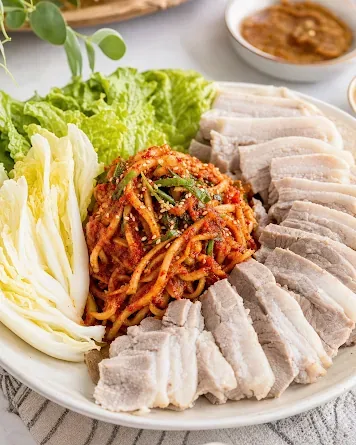
Build one wrap at a time
Bossam brings several textures to the table without folding them together in the pot. Warm pork, flexible napa cabbage, and spicy radish each keep their own character until someone builds a wrap. I like that small act of choosing a piece of pork and deciding how much radish belongs beside it. The meal feels generous because the components work together, not because every wrapper has to be filled to its limit.
My Seoul upbringing makes the names of these ingredients familiar, but the most useful introduction is practical: the cabbage needs to bend, the pork needs to yield, and the radish needs to be cut finely enough to share a bite. You don't need a complicated presentation. Keeping the dishes separate makes the contrasts clear and gives everyone room to choose the balance they want at the table.
Organize three components around one clock
Cabbage salting is the longest stated wait, so begin with the brine and use that time for the pork and radish preparation. The tasks overlap, but they don't need constant attention at the same moment. Put out a vessel large enough to hold the cabbage, a pot suitable for the pork, and a bowl for tossing the radish. That simple division keeps raw-pork utensils away from the vegetables served without further cooking.
Before shopping, check the pantry for doenjang, gochugaru, and the fermented seasonings. These have distinct roles, so buying them deliberately is more useful than substituting several unrelated sauces at once. Korean or daikon radish is the listed choice; choose a firm piece you can slice cleanly. Optional minari can add a fresh accent, but it doesn't need to turn into a special shopping trip if it isn't available.
Step 1: Salt the cabbage for flexibility
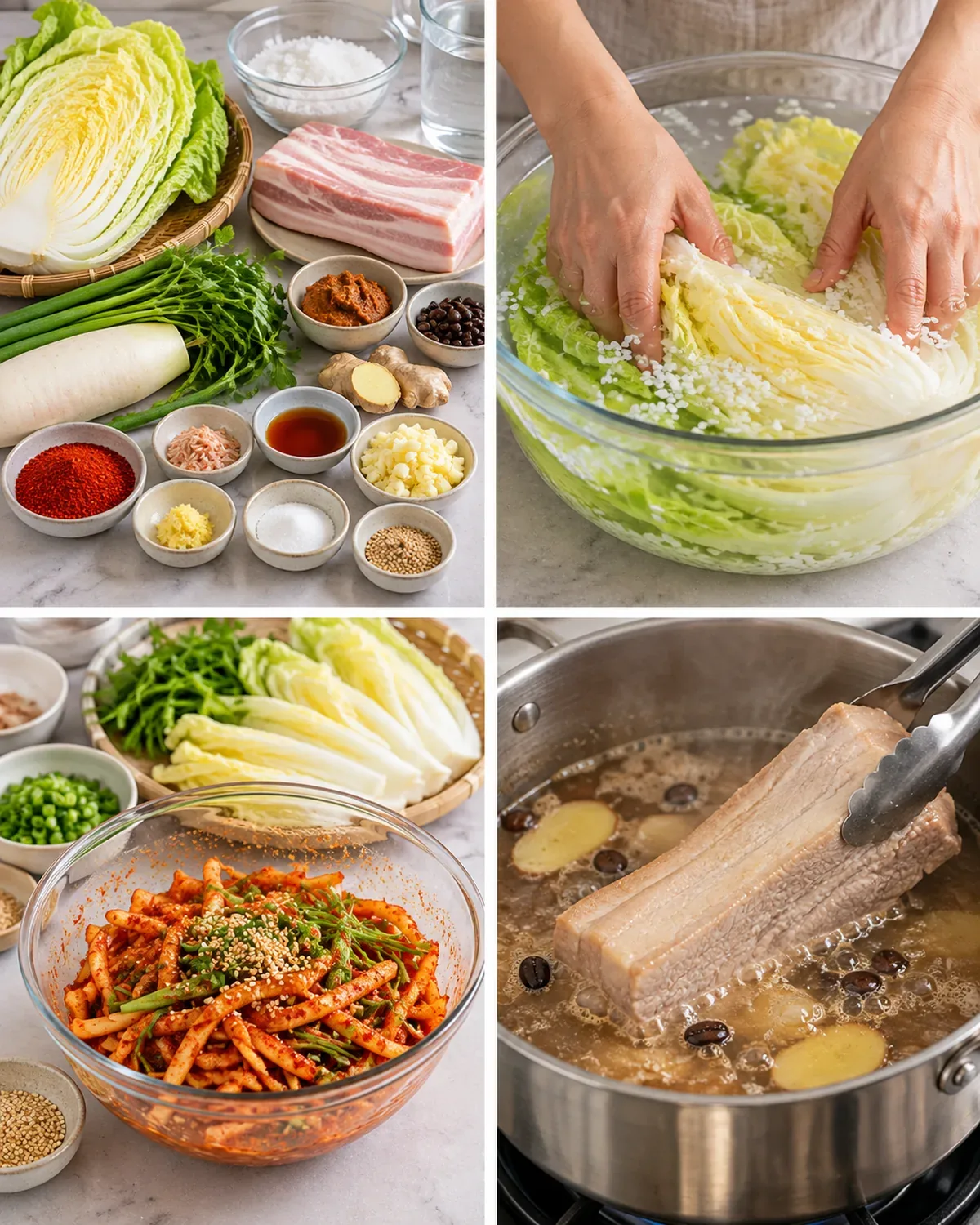
The cabbage goes into a measured brine made with Korean cheonilyeom sea salt. That salt belongs in the brining water; it isn't an amount to sprinkle over the finished plate. Dissolve it before submerging the leaves so some pieces don't sit against undissolved salt while others receive a weaker bath. Use about half a napa cabbage, separating leaves or working with the half as described in the method.
After the salting period, look for leaves that bend while keeping a little crunch. These are wrappers, not fermented kimchi, and you aren't waiting for them to collapse completely. The thicker white ribs and the thin leafy ends naturally feel different, so handle them gently when checking. Drain well for the full interval in the method; water held between the leaves can collect on the serving platter and dilute the radish seasoning.
Step 2: Cut the cabbage wrappers to a manageable size
Split the drained leaves lengthwise into pieces that can wrap comfortably around a slice of pork. A very wide leaf can make an awkward bundle, while a thin strip doesn't offer enough support. Let the natural shape guide you instead of aiming for identical rectangles. Keep the pieces ready in their own dish, and refrigerate drained cabbage if preparing it ahead within the recipe's stated allowance.
Napa has both soft leaves and firmer ribs, and each can contribute a good bite. If a rib is particularly broad, a narrower lengthwise piece can make it easier to fold. There is no need to hide every variation. I prefer wrappers that are easy to pick up and fill. A manageable leaf with a modest filling lets you enjoy the balance of pork and radish in each bite.
Step 3: Give the pork a gentle simmer
Doenjang, ginger, and coffee beans flavor the water around the pork. Miso is the listed alternative to doenjang if that is what you have; its own flavor will carry through to the pork. Bring the seasoned water to a boil before adding the meat, then reduce to the gentle simmer described. A violently moving pot is unnecessary for making the pork tender and can make the cooking less orderly.
The recipe is written around a two-pound piece of pork belly, with shoulder or butt as alternatives. Those cuts aren't interchangeable on the clock: shoulder can need longer before a fork enters easily. Keep both the method's temperature check and the tenderness cue in view. A minimum temperature tells you one thing, while the resistance of the meat tells you whether it has reached the texture you want for these wraps.
Step 4: Rest before making serving slices
Lift the pork from its cooking liquid and let the immediate steam settle before loosely covering it. The rest in the method belongs before slicing, and a little patience also makes the meat more comfortable to handle. Use a board that catches juices, with a knife sharp enough to make a clean cut. Pressing hard with a dull blade can squash a tender piece instead of producing useful slices.
Aim for slices that fit the wrappers you prepared, with enough substance to pick up but not so thick that they dominate the whole bite. Belly has visible layers of meat and fat, which is part of its texture. Let those layers remain recognizable. Keep the pork warm for serving without drying its cut faces unnecessarily, and bring it to the table with the cabbage and radish ready rather than leaving sliced meat waiting through the rest of preparation.
Step 5: Cut radish for texture and even seasoning
Fine matchsticks let the radish sit neatly alongside the pork and take up seasoning across many surfaces. Keep their size reasonably consistent so you don't have a few large, hard sticks among thin shreds. A mandoline can help, but a knife is perfectly useful; use the tool you can control comfortably. A stable cutting board and a flat side on the radish make the work steadier.
The radish isn't cooked into softness, so its crispness is a deliberate contrast to the pork. Avoid cutting it into chunks simply to finish faster. Green onions and optional minari should be prepared before the final toss, with the sesame seeds held for serving as the method directs. Having those small additions ready lets you combine the radish without stopping to chop with seasoning already covering your hands or utensils.
Step 6: Let the fermented seasonings do their work
Gochugaru gives the radish its color and chili character, while salted shrimp and anchovy sauce bring savory depth and salt. Garlic and ginger are part of the seasoning paste, and the measured sugar helps balance the strong flavors without turning the mixture into a sweet relish. Mix the paste first so the seasoning doesn't sit in a few concentrated patches when it reaches the radish.
At first the radish may look dry under the seasoning. Give it time to release some of its own juice rather than adding liquid just to change its appearance immediately. Toss thoroughly, then fold in the fresh greens and finish with sesame seeds when serving. This is a strongly flavored component meant to accompany plain cabbage and rich pork, so think about the whole wrap when deciding how much radish to put on the plate.
Step 7: Set out the components and serve
Offer the three components separately, or arrange them in distinct areas on a platter. A small amount of radish can be tucked beside the pork rather than covering every slice in advance. That keeps cabbage from becoming wet and lets a person begin with a gentler wrap. If someone wants more chili or more crunch, the shared dishes are right there without changing the whole meal.
The fermented shrimp and anchovy sauce matter for people avoiding seafood, and doenjang or miso can have their own ingredient considerations. Keep the basic version clear rather than assuming an optional change makes it suitable for every restriction. I prefer keeping this meal focused on the listed pork, cabbage, and radish. The optional oyster variation is unnecessary for the basic recipe and adds another ingredient to plan and handle separately.
Save components for a useful second meal
Leftover cabbage, pork, and radish are easier to manage when stored separately. Cover and refrigerate the remaining components promptly, using the cabbage's stated advance window when planning that part. Don't count a new container as a new start for food that has already been kept ahead. A label with the preparation day makes the next decision much simpler than trying to remember which component was made first.
Reheat the portion of pork you intend to serve rather than warming the entire remainder repeatedly. Keep the cabbage and radish separate until the next meal is assembled. A smaller second serving can use the same contrasts with a modest side you already have planned. For me, the useful part of a shared platter is knowing where the extra pieces belong afterward, so the generous first meal doesn't leave several neglected containers behind.
Growing up in Seoul gave me a love for a table with several small choices. That suits my family now, especially with my son's love of kimchi and my daughter's pickier tastes. Keep the pork and wrappers separate when packing, and add lettuce or perilla beside the cabbage. Each bite can have its own balance without the fresh leaves getting soggy while they wait.
Joy.Prepare bossam with simmered pork belly, salted cabbage and seasoned radish. Set out the components so everyone can build a Korean pork wrap.
Tap each ingredient as it goes into your basket or bowl.
Follow the steps in order to make this recipe.
Dissolve the Korean cheonilyeom sea salt in the measured water to make the cabbage brine.
Separate enough napa leaves to use about half a cabbage, or cut the head in half and work with one side.
Submerge the cabbage in the brine for about 1½ hours. Look for flexible leaves that still have a little crunch; they do not need the fully softened texture of fermented kimchi.
Drain well for 10–15 minutes. If preparing ahead, refrigerate the drained cabbage up to 3 days.
Before serving, split the cabbage leaves lengthwise into manageable wrapping pieces.
Bring 8 cups water to a boil in a pot with doenjang, fresh ginger and coffee beans.
Add the 2-pound pork belly and reduce to a gentle simmer. Allow about 60 minutes, or longer until a fork enters easily. Check the thickest part reaches at least 145°F and rest at least 3 minutes before slicing. Pork shoulder needs more time to become tender.
Lift the pork from the liquid and cover loosely after a few minutes so the surface does not dry out. Once comfortable to handle, slice for serving while still warm.
Cut the radish into fine matchsticks with a knife or mandoline.
Chop the green onions and optional minari for the fresh radish mixture.
Combine gochugaru, saewoojeot, anchovy sauce, garlic, ginger, sugar and salt into a seasoning paste. Keep the sesame seeds for the finish.
Toss the radish with the seasoning until coated. The mixture may look dry initially; the radish will release juice as it stands.
Fold in green onions and minari, then scatter sesame seeds over the radish at serving time.
If adding oysters as an optional variation, adjust the seasoning to suit the added portion. Keep the basic cabbage, pork and radish components separate until serving.
Arrange warm pork, cabbage wrappers and spicy radish on a platter, or offer each in its own dish. Let everyone build a wrap at the table.
Prepare bossam with simmered pork belly, salted cabbage and seasoned radish. Set out the components so everyone can build a Korean pork wrap.
Joy’s kitchen note · Growing up in Seoul gave me a love for a table with several small choices. That suits my family now, especially with my son's love of kimchi and my daughter's pickier tastes. Keep the pork and wrappers separate when packing, and add lettuce or perilla beside the cabbage. Each bite can have its own balance without the fresh leaves getting soggy while they wait.