TimeAbout 15 min active + 15 min equipment chilling
Makes2 drinks
CategoryDrinks
Tastefully Planned,
Joyfully Cooked.

A warming Italian-style drink with concentrated chocolate, espresso and a softly aerated layer of cold cream.
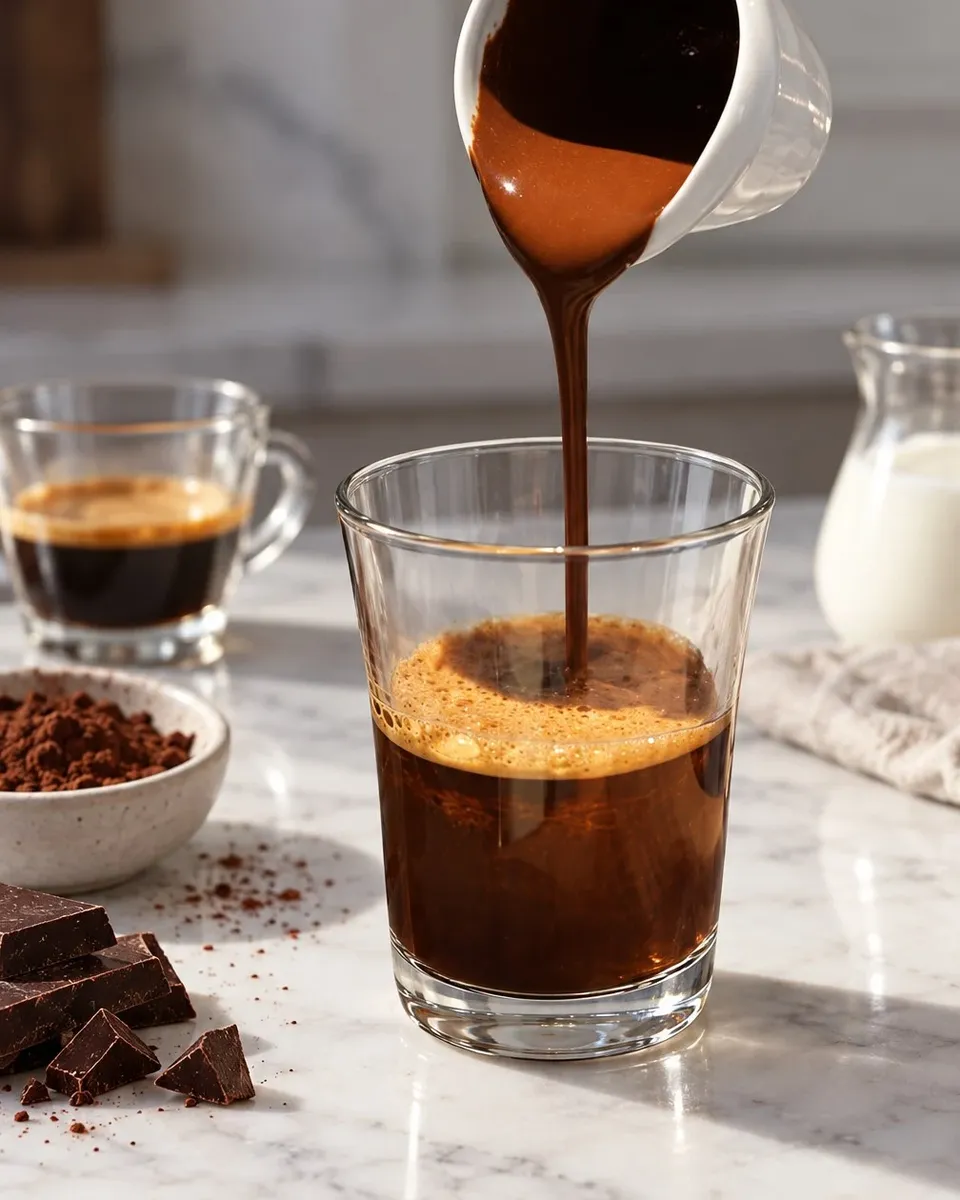
Three layers, a small moment to pause
Bicerin is associated with Turin and combines coffee, chocolate and cream in a small glass. This home version uses the same appealing contrast without requiring a cafe setup. Warm espresso and chocolate sit beneath a cool, softly thickened cream layer, so both temperature and texture matter. Its richness suits a small dessert glass, with enough room to enjoy the coffee, chocolate and cream together. Prepare the glasses and cream first, then brew the espresso near the end. That simple order keeps the warm layers ready for pouring when the cool cream is waiting.
Make the chocolate choice clear
The basic version here uses unsweetened cocoa powder, with sugar added to taste. Cocoa, shaved dark chocolate and sweetened hot-chocolate mix are not interchangeable by volume without changing richness and sweetness. Using one defined base makes the instructions easier to follow and the result easier to adjust next time. Whisk the cocoa with a small amount of the water first if it wants to float in dry patches, then add the rest. The mixture should become smooth before it simmers. Taste after the cocoa has cooked, since raw cocoa powder can seem harsher and chalkier than the finished chocolate layer.
Step 1: Prepare the concentrated chocolate
The chocolate portion needs enough body to remain distinct from the coffee, but it should still pour. A gentle simmer evaporates some water and allows the cocoa to hydrate. Stir along the bottom and corners of the small saucepan so a concentrated patch does not catch. If it thickens too far, loosen it with a small splash of hot water, keeping the measured cream for the topping. Sweeten gradually and remember that the finished drink includes cream, which softens bitterness. A pourable consistency lets that deep chocolate flavor mingle with the coffee as you drink.
Step 2: Prepare the coffee
Espresso contributes the bitterness and aroma that keep the chocolate and cream from feeling one-dimensional. Brew it shortly before assembly so it is warm and fragrant. The recipe describes long shots of roughly one-third cup each, but home machines and moka pots do not all produce the same concentration. If using strong brewed coffee, expect a lighter coffee presence and a less defined layer rather than claiming an identical drink. Avoid adding a very large volume of weak coffee; it dilutes the chocolate and leaves less room for the cream, changing both the proportions and the small-glass experience.
Step 3: Whip the cream to soft peaks
Chilling the jar or shaker helps the cream thicken without warming during the process. Shake or whisk until the cream has a little body and falls in a thick ribbon, stopping before firm peaks. A stiff whipped topping is attractive in another context, but it is harder to sip with the coffee and chocolate beneath it. Over-shaking can make the cream grainy as the fat begins to clump. If you see that texture developing, stop immediately. Keep the cream in the refrigerator while the espresso is being brewed, then give it a gentle stir if needed before spooning it into the glasses.
Step 4: Layer with patience, serve without delay
Use heat-safe glasses and warm them with hot water so the drink does not lose heat as soon as it is assembled. Empty and dry the glasses, divide in the espresso and chocolate, and add the cream slowly over the back of a spoon. The spoon spreads the flow so it does not plunge directly through the warm mixture. The exact borders will vary with the density and temperature of each component; a slightly blended edge is not a failed drink. Serve right away while the warm and cool contrast is still distinct. A clear glass makes the composition visible without needing any garnish.
A practical way to use a small cream purchase
This recipe uses only two-thirds cup of cream for two drinks. Before shopping, decide how the remainder of the carton will fit into another recipe, or choose a smaller package if available. Unsweetened cocoa is a pantry ingredient that can serve several projects, so there is no need to buy a specialty chocolate mix for one glass. Keep added sugar measured and adjustable, tasting the chocolate rather than automatically sweetening every layer. A small serving after a meal is plenty rich. If caffeine matters for the time of day, decaffeinated espresso can keep the coffee character while changing the caffeine contribution.
What can wait and what cannot
The chocolate mixture is the component that can be made ahead most conveniently. Cool it, refrigerate it covered and warm it gently, loosening with a little water if necessary. Keep plain cream chilled and aerate it close to serving, because its volume and texture will change as it stands. Fresh espresso is best made at assembly time. Store remaining dairy components promptly rather than leaving them beside the warm stove. Do not save an assembled glass expecting the layers to remain separate in the refrigerator; it is more practical to keep the components apart and build a fresh small serving when wanted.
The glasses should suit hot liquid
Choose cups or glasses intended for hot drinks rather than any thin decorative glass that happens to show layers. Warming the vessel gently reduces the chill on the coffee, but it does not make an unsuitable glass heat-safe. Place the glasses on a stable surface before pouring and leave enough room for the cream. A small glass makes the proportions look deliberate and keeps the drink from becoming an oversized dessert. If serving two people, divide the chocolate and espresso evenly before adding cream so the second glass is not left with an unusually sweet or weak mixture. Clear presentation should never depend on a fragile container.
Taste the components together
The chocolate base alone may seem stronger and more bitter than you would want to drink by the cup, while the plain cream may seem unsweetened. Their purpose is to meet the espresso in a small serving. Before adding a large amount of sugar, cool a tiny spoonful of chocolate and taste it with a little cream if needed. Sweeten the chocolate gradually so the coffee still has a role. Different cocoa powders and coffees shift that balance, so a measured adjustment is more useful than a fixed assumption that every brand will taste identical. Keep a note of the cocoa and coffee you used if you want to repeat the same balance later.
A spoon or a sip changes the experience
The layers can be appreciated as a warm-and-cool sequence while sipping, or mixed more deliberately with a spoon. Both reveal a different balance of chocolate, cream and coffee. Serve the drink without an extra dusting of cocoa that could form a dry patch on the first sip. A small spoon is useful if the chocolate has thickened at the bottom, but the finished drink should not require vigorous stirring simply to become fluid. If it does, the chocolate base was reduced too far or cooled too much before assembly. A little hot water in the base next time is a clearer adjustment than adding more coffee to an already full glass.
Scaling for more than two drinks
The chocolate can be multiplied in one saucepan, but cream and espresso need a service plan when several people are waiting. Prepare the warm glasses and measured portions first, keep the cream chilled and brew coffee in a sequence your equipment can handle. A long delay leaves the first drinks cooling while the last shots are made. For a group, serve smaller rounds or accept a less elaborate layered presentation rather than keeping every component at room temperature for an extended period. The two-drink recipe is designed for a focused moment; a larger batch needs organization around the coffee machine as well as multiplication of the ingredients.
Keep the cream cold and stop while it is softly thickened and pourable. It should form a gentle top layer rather than a stiff mound of whipped cream.
Joy.A warming Italian-style drink with concentrated chocolate, espresso and a softly aerated layer of cold cream.
Tap each ingredient as it goes into your basket or bowl.
Follow the steps in order to make this recipe.
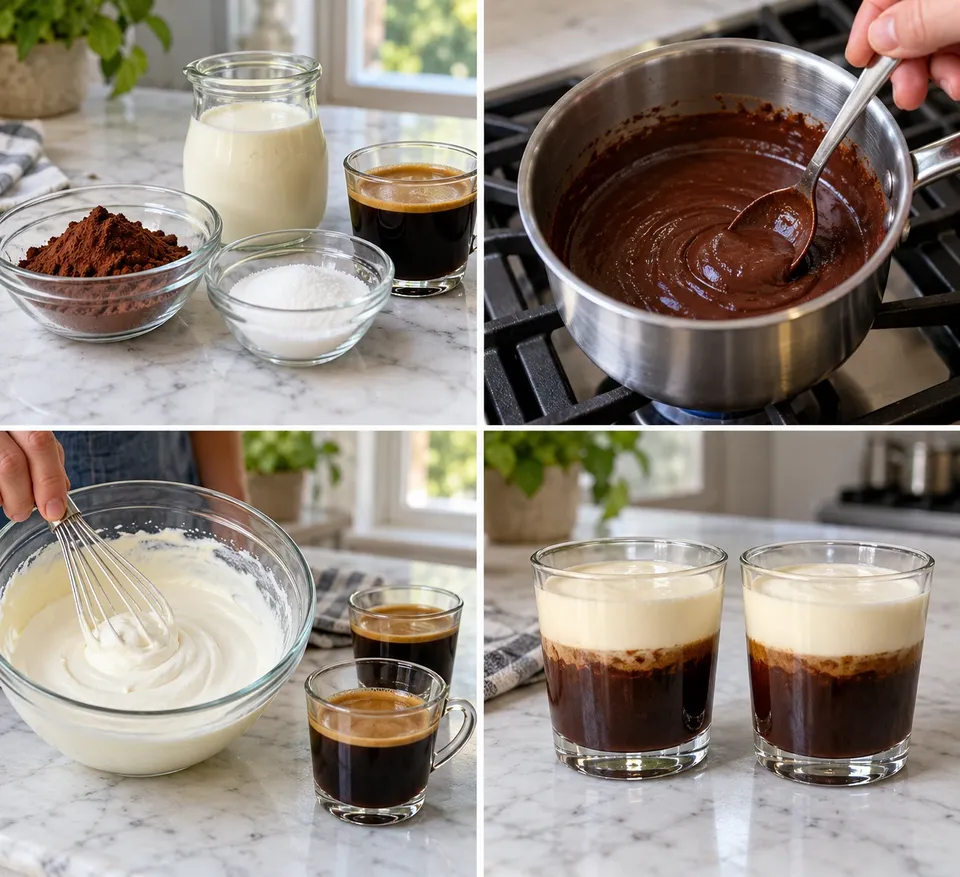
Chill a clean jar or metal shaker for at least 15 minutes. Warm two heat-safe serving glasses with hot water, then empty and dry them before assembling.
Whisk 1/3 cup unsweetened cocoa with about 2/3 cup water in a small saucepan. Simmer gently, stirring, about 10 minutes until smooth and lightly thickened. Add sugar to taste and remove from the heat.
Pour the cold cream into the chilled container and shake or whisk until thickened but still pourable. Stop before it becomes stiff or grainy.
Brew 2 long espresso shots, about 1/3 cup each. Divide the espresso and chocolate between the glasses, then slowly spoon the cream over the back of a spoon so it sits on top. Serve immediately.
A warming Italian-style drink with concentrated chocolate, espresso and a softly aerated layer of cold cream.
Joy’s kitchen note · Keep the cream cold and stop while it is softly thickened and pourable. It should form a gentle top layer rather than a stiff mound of whipped cream.