Time25 min prep + 6–7 hr roasting + 12–36 hr marinating + 30 min rest
Makes12 servings
CategoryDinner
Tastefully Planned,
Joyfully Cooked.

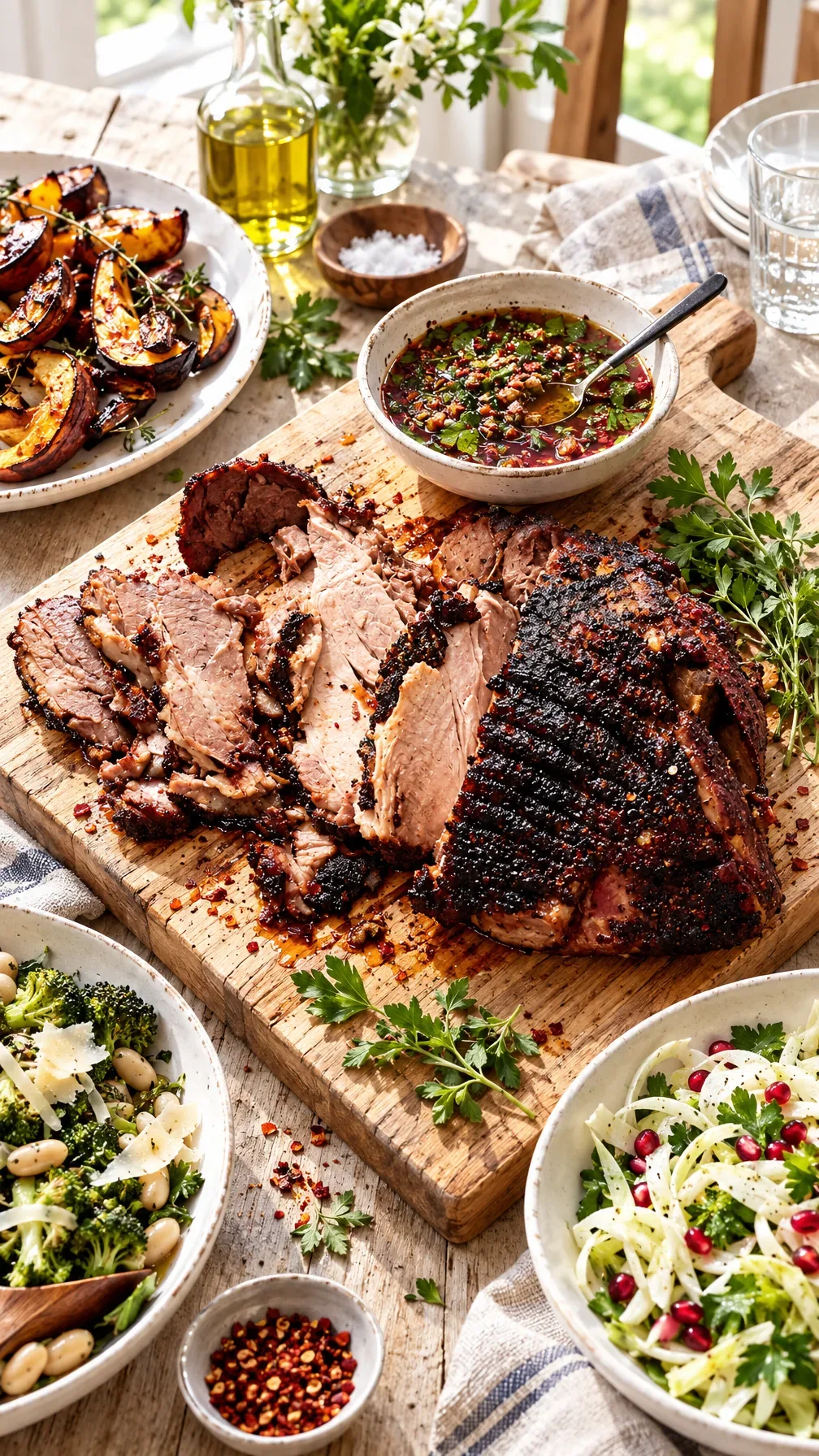
Slow-roast Aleppo pepper pork shoulder with garlic and brown sugar. Serve the tender meat with a sharp shallot vinaigrette after resting.

A large roast deserves a longer view
An eight-to-ten-pound pork shoulder is a meal-planning decision before it is an oven project. There is a substantial piece of meat to season, a long roasting window, and enough finished pork for more than a small table. I like the combination of a dark, seasoned exterior and a sharp shallot dressing alongside. The dressing gives each serving some brightness without covering the character of the roast itself.
Think about the first meal and the remaining portions before buying the shoulder. Twelve servings can be useful when they have a destination, whether that means several people at dinner or portions reserved for later meals. A large package isn't automatically a bargain if the food has no plan afterward. The appealing economy of this roast is giving one long cooking project several clear uses, with vegetables and sides that can change around it.
Keep the cut and its size in view
The recipe calls for a bone-in Boston butt, a shoulder cut with the structure and fat that suit long cooking. A lean pork loin is a different cut and won't become this roast simply by spending the same hours in the oven. Check that the roasting pan can hold the shoulder comfortably and that the covered pan fits in the refrigerator before applying the rub. These are easier questions to solve while the meat is still wrapped.
The bone and the roast's shape affect how the shoulder sits and where you check tenderness. Leave enough space to spoon juices over it later without lifting the whole piece each time. Have a sturdy board and a place for the hot pan in mind as well. Clear a landing area before the roast comes out. A heavy piece of pork and its hot juices are much easier to manage with room to work.
Aleppo pepper gives warmth with character
Aleppo pepper brings a rounded chili flavor to both the rub and the vinaigrette. The crushed-red-pepper alternatives are deliberately smaller amounts, and the two parts of the recipe use different substitutions. Measure the option for the rub and the option for the dressing separately. Replacing the Aleppo pepper spoon for spoon with a stronger flake can make a much hotter dish than intended, especially when both components reach the same plate.
If Aleppo pepper is new to your pantry, start with a small container and think about where you'll use the rest. Keep to the measured amount for this shoulder, then save the remainder for those other dishes. The roast already combines chili, grated garlic, salt, and brown sugar. Those few ingredients give it a clear identity without collecting several additional spice jars for a single dinner.
Step 1: Mix the rub so every part is seasoned
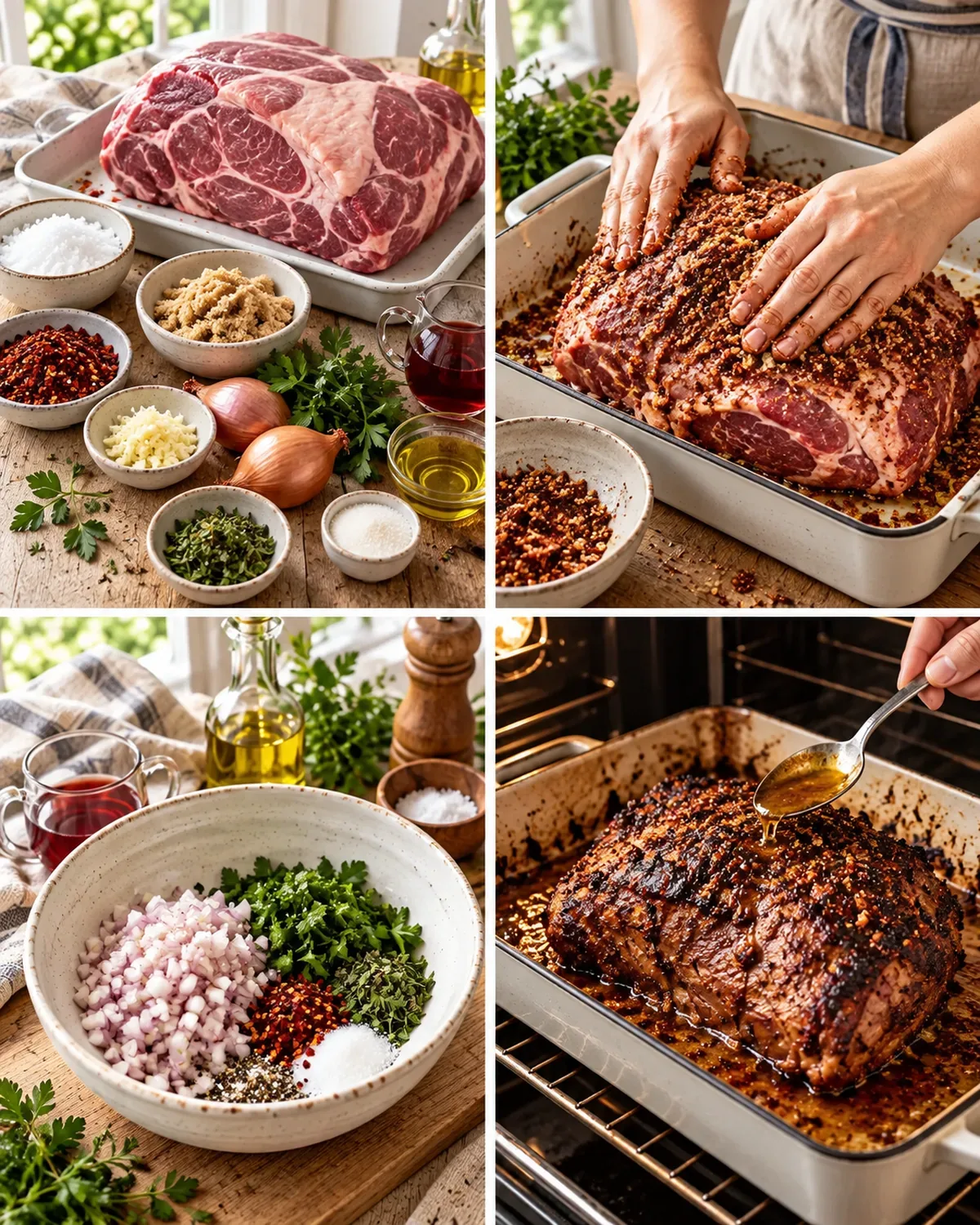
Finely grated garlic spreads through the rub more evenly than large chopped pieces. Combine it with the measured pepper, kosher salt, and packed brown sugar before working the mixture over the pork. Reach around the sides and into accessible crevices rather than leaving a thick mound only on top. The seasoning should be distributed across the large surface, where it can become part of the crust.
Kosher salts vary in density, so use the stated measure attentively and avoid adding more because the roast is large. The vinaigrette will also be seasoned later. Brown sugar helps the exterior develop color, which is welcome but also means a dark surface can arrive before the interior is tender. Keep that connection in mind from the start instead of assuming that a deeply colored crust signals the end of the long roast.
Step 2: Give the covered pork its refrigerator window
The twelve-to-thirty-six-hour seasoning period belongs in the refrigerator, within the temperature and overall storage limits described in the method. Count backward from roasting time so the pork isn't seasoned later than you intended or held longer simply because dinner plans moved. Keep the pan covered and positioned to contain any juices. The wait is part of the recipe's schedule, not permission to leave a large piece of raw meat on the counter.
Use that advance time to decide on sides and organize serving containers rather than doing unnecessary extra work on the pork. There is no second marinade to make or new seasoning to add halfway through. I prefer a clear preparation window that leaves the next day focused on roasting. With a meal this large, knowing when the oven will be occupied is more helpful than adding another elaborate dish that needs the same space and attention.
Step 3: Roast slowly and watch the exterior
The low oven gives the shoulder time to become tender through its thickest areas. Spoon the pan juices over it about hourly as directed, using the visit to look at the surface and the liquid in the pan. Repeatedly opening the door every few minutes doesn't help the roast progress. A regular, purposeful check lets you baste and assess color without constantly interrupting the oven's heat.
If the exterior darkens too quickly, cover it loosely with foil while the inside continues cooking. This protects the seasoned surface rather than declaring a browned roast finished early. The stated six-to-seven-hour window may extend, depending on the piece of meat. Keep some flexibility in the serving plan, particularly if the shoulder is near the larger end of the weight range. Tenderness is difficult to hurry simply because the side dishes are ready.
Temperature and tenderness answer different questions
Use a thermometer in the meat rather than against the bone, and follow the method's minimum temperature check. Shoulder generally needs further cooking to become pleasantly tender, so that minimum isn't a promise that a large roast is ready to carve the way you want it. A probe that enters with little resistance is the texture cue to consider alongside the temperature reading.
Check more than one substantial area if the shoulder is unevenly shaped. A softer edge doesn't describe the deepest portion, just as a dark crust doesn't tell you what the center feels like. Allow the roast the time it needs rather than pulling it at the first acceptable reading and expecting the rest to complete several hours of tenderizing. The aim is meat that yields easily, with the crust and interior both ready to serve.
Step 4: Make the vinaigrette deliberately sharp
Finely chopped shallots give the dressing texture without leaving large raw pieces that dominate a bite. The red wine vinegar supplies its clear acidity, while parsley and marjoram or oregano give a fresh herbal direction. Choose between those two herbs according to what you have and what else you plan to cook. There is no need to buy both for a dressing that calls for one.
Whisk in the pepper, oil, sugar, and measured water, then season with salt and black pepper. The water is part of the balance, not an indication that the dressing needs more oil until it resembles a thick salad dressing. Taste thoughtfully, remembering that it will accompany a salty, rich piece of pork. A small spoonful can do plenty. Keep the dressing covered and refrigerated if using its advance option, within the method's six-hour window.
Step 5: Rest the roast and let the portions guide carving
The roast needs at least its stated thirty-minute rest on the board before slicing. Build that time into dinner rather than counting the oven's finish as the moment plates should be filled. The rest also gives you a chance to finish vegetables, transfer the dressing, and organize serving utensils. Keep the board stable and protect the surrounding counter from juices before setting down a heavy shoulder.
Carve portions that make sense for the meal, working around the bone and following the meat's tenderness rather than forcing every piece into identical formal slices. Save useful pan juices and remove excess fat if that suits your preference. A little juice can moisten served meat without drowning the crust. Pass the vinaigrette separately so each person can choose a sharp accent, and so any pork reserved for another meal keeps its own flavor.
Turn the remaining roast into planned meals
Crusty bread or roasted seasonal vegetables are useful companions, and either can make use of the meat and juices without another complicated sauce. For later meals, choose portions with a purpose rather than leaving the entire roast as one large refrigerator task. Store cooked pork covered and refrigerated promptly. If using the method's roast-a-day-ahead option, allow the reheating time and continue as needed until the meat is heated through.
Keep the vinaigrette separate from stored pork so you can control the balance each time it is served. Reheat only the portion needed instead of repeatedly warming the full remainder. Smaller portions are easier to fit into a meal with a fresh vegetable or a different simple side. This is the part of large-roast cooking I value: the long oven time can support more than one meal, while the second plate still feels intentionally put together rather than merely left over.
A roast makes me think beyond the first meal, especially with my husband's lunch or a shared work meal in mind. Keep the vinaigrette separate so each portion can have the amount it wants. Crusty bread or roasted seasonal vegetables make useful sides for the rich pork. I like one main dish that leaves room for different plates, instead of another full dinner to cook.
Joy.Slow-roast Aleppo pepper pork shoulder with garlic and brown sugar. Serve the tender meat with a sharp shallot vinaigrette after resting.
Tap each ingredient as it goes into your basket or bowl.
Follow the steps in order to make this recipe.
Combine the 5 grated garlic cloves, 5 tablespoons Aleppo pepper (or the smaller listed amount of red pepper flakes), kosher salt and 5 tablespoons brown sugar. Rub over the pork and place in a large roasting pan. Cover and refrigerate for 12–36 hours, keeping the refrigerator at 40°F (4°C) or below. Count this time within the pork’s overall refrigerated storage period.
Roast uncovered at 300°F, spooning the juices over the meat about hourly. Cover loosely with foil if the surface darkens too quickly. Allow about 6–7 hours or longer, until the shoulder yields easily to a probe. Check at least 145°F internally; the tenderness of shoulder generally needs a higher temperature. Rest on a board at least 30 minutes before slicing.
The pork may be roasted 1 day ahead. Cool, cover and refrigerate, then warm in a 225°F oven for about 1 hour, continuing as needed until heated through.
Whisk shallots, vinegar, parsley, marjoram, Aleppo pepper, oil, sugar and 2 tablespoons water. Season with salt and black pepper and spoon alongside the pork.
Make the dressing up to 6 hours ahead if useful, keeping it covered in the refrigerator.
Slow-roast Aleppo pepper pork shoulder with garlic and brown sugar. Serve the tender meat with a sharp shallot vinaigrette after resting.
Joy’s kitchen note · A roast makes me think beyond the first meal, especially with my husband's lunch or a shared work meal in mind. Keep the vinaigrette separate so each portion can have the amount it wants. Crusty bread or roasted seasonal vegetables make useful sides for the rich pork. I like one main dish that leaves room for different plates, instead of another full dinner to cook.