Time30 min prep + 15–20 min batch cooking
Makes4 servings · 30 dumplings
CategoryAsian Fusion
Tastefully Planned,
Joyfully Cooked.

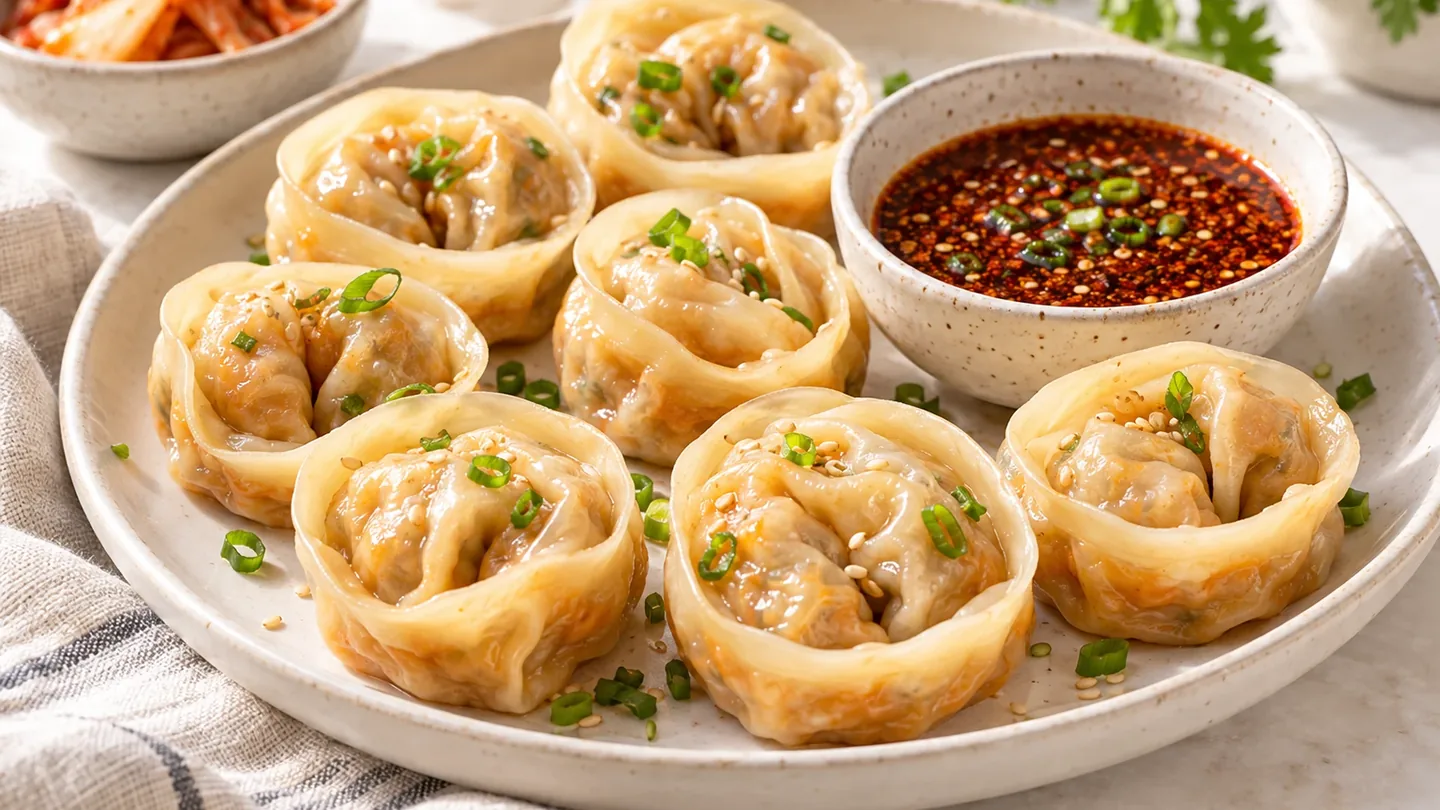
Fill dumpling wrappers with pork, kimchi and gochujang. Seal clean edges, crisp the bottoms and steam the filling through before serving.
A dumpling with a clear savory filling
These dumplings combine ground pork, napa cabbage and kimchi inside a simple folded wrapper. Gochujang adds chile depth, while garlic, ginger and sesame oil make the filling fragrant. Pan-frying gives the bottom a golden surface; covered steaming cooks the center; the final uncovered stage brings back some crispness. Each stage has a purpose, which is why a good dumpling is about more than making an attractive fold.
The recipe makes thirty dumplings for four servings. That is a useful shared main with rice or a simple vegetable side, depending on the rest of your meal. I like hands-on cooking jobs more when the counter has a clear arrangement, and dumplings reward that approach. Set up the wrappers, filling, a little water for sealing and a tray before starting. You can then concentrate on even filling and firm seals instead of repeatedly crossing the kitchen with sticky hands.
Step 1: Cut the vegetables finely
Finely chopped cabbage mixes through ground pork more evenly than long shreds. The pieces should be small enough to sit inside a tablespoon of filling without poking against the wrapper. Kimchi also needs fine chopping, followed by the squeeze specified in the ingredient list. Its loose liquid can make sealing harder and leave the mixture wetter than intended. You want kimchi flavor in the pork, not extra brine working its way to the wrapper edges.
Measure the prepared vegetables as described so the filling keeps its intended proportions for thirty wrappers. Its texture affects both shaping and cooking, so slice the green onions finely and take a little time over the rest of the chopping. Small, even pieces spread comfortably through the pork and let each wrapper close around a manageable portion. That careful preparation makes the later filling and sealing much smoother.
Step 2: Mix the filling evenly
Combine the pork with the vegetables and seasonings until the mixture is evenly distributed. Turn the mixture from the bottom of the bowl and look for kimchi and green onion evenly spread through the pork. Work the thick gochujang into the meat until its red color is consistent throughout. Garlic and ginger should also be dispersed so one dumpling does not hold most of their sharpness.
The filling is raw, so do not taste it directly to check seasoning. Follow the measured amounts and keep the work area separate from ready-to-eat foods. If shaping takes longer than expected, keep the filling appropriately refrigerated instead of leaving it on the counter through an extended project. Clean tools and a defined raw-pork area make this a more comfortable job, especially when there are other meal components nearby that will not be cooked again.
Step 3: Set up wrappers before making the first fold
Round dumpling wrappers vary somewhat in size and thickness, so check the package and keep them covered according to its directions while you work. Exposed edges can dry and become difficult to seal. Separate a manageable number rather than laying every wrapper across the counter at once. Have the tray close enough that each shaped dumpling can move straight from your hands to its waiting place.
A small dish of water lets you moisten the rim without soaking the wrapper. Too much water can make the edges slippery and weak; too little can leave dry flour between them. Start with a light touch and learn from the first few. The half-moon shape in the recipe is sufficient. Decorative pleats are optional handwork, not a requirement for a properly sealed dumpling, and a plain firm seam is more useful than a pretty seam with gaps.
Step 4: Fill evenly and protect the seal
About a tablespoon of filling is the intended starting point for each wrapper. The quantity should leave a clear border all the way around. Overfilling can seem efficient, but it makes the wrapper stretch and increases the chance of leakage in the pan. Fold one side over the filling, press out obvious air pockets gently, and seal the edges firmly without pushing pork into the seam.
If the first dumplings are difficult to close, reduce the filling slightly rather than repeatedly adding more water. Keep the shaped pieces separated on their tray so damp wrappers do not stick to one another. Notice the remaining filling as you go; even portions are easier to achieve when you check halfway through instead of discovering at the last wrapper that most of the mixture has already been used. Small, consistent dumplings also make the batch-cooking stage easier to manage.
Step 5: Give the bottoms direct contact
A nonstick skillet and a little of the measured oil help the dumplings develop golden bases without excessive sticking. Arrange them flat-side down in a single layer, leaving enough space to lift them later. The first frying stage is about coloring the wrapper at the point of contact. It is not expected to cook the raw pork center completely, so do not stop here just because the bottoms look appealing.
Work in batches and divide the oil accordingly. Pouring all the oil into the first panful can leave later batches dry and the first batch unnecessarily greasy. Have the lid and water ready before moving to steaming. Once the dumplings are browning, the pan is too busy a place to begin searching for equipment. That short preparation step also makes it easier to add water carefully and cover promptly without holding an open hot pan longer than necessary.
Step 6: Steam the center before re-crisping
The shallow water layer creates steam under the lid, helping the filling cook through while the wrapper becomes tender. Add the water carefully to the hot pan and cover as directed. Watch the pan during the covered stage. If it dries before the filling has cooked, the recipe allows a small additional splash so steaming can continue. Simply letting the bottoms fry harder will not reliably solve an unfinished center.
Use the stated temperature check for the center of the pork filling. A browned wrapper and a steaming pan do not tell you the internal temperature by themselves. Choose a representative dumpling, especially if some are larger, and continue cooking when needed. Once the filling is cooked, uncover and let the remaining water evaporate. That final stage restores texture to the base. Remove the dumplings when the bottoms are crisp enough for you, before they become dark and bitter.
Step 7: Think in batches all the way to the table
Thirty dumplings will usually require more than one panful, so allow the full batch-cooking time in your meal plan. Keep raw shaped dumplings separate from cooked ones and use clean utensils for serving. As each batch finishes, place it where the pieces are not tightly piled together. Trapped steam can soften the crisp bottoms, particularly when a deep bowl holds several layers of hot dumplings.
You can serve in rounds if that suits the meal, or organize a platter as the final batch cooks. Either way, do not rush the last batch because the first one is already on the table. The same filling checks apply throughout. Keep the garnish simple with sesame seeds and sliced green onion. A dipping sauce, rice or sliced cucumber can be offered alongside as an optional accompaniment, but the pork and kimchi filling already has substantial seasoning of its own.
Make shopping and shaping a manageable project
Dumpling wrappers often come in counts larger than this recipe requires. Check the package before shopping and plan the remainder according to its storage directions. Napa cabbage, kimchi and green onions can also serve another meal, so decide where those ingredients will go while preparing this one. The cost of dumplings at home includes the ingredients left unused, not just the pork and wrappers that make it into the pan.
If you want to prepare ahead, distinguish between organizing ingredients and storing raw filled dumplings. Follow the wrapper package and safe handling guidance for your actual timing rather than leaving a tray at room temperature while waiting for dinner. This recipe is designed as a shaping-and-cooking session, and that is a good starting plan for the first batch you make. Once you understand how your wrappers behave, you can organize future sessions around your available refrigerator or freezer space.
Serve sensible portions and save with care
Divide the dumplings with the rest of the meal in mind. A few alongside rice and vegetables can be satisfying without making the entire plate one texture. The kimchi and gochujang should be described clearly for anyone cautious about heat. Offering a familiar side gives people a choice without changing the filling after it has been mixed. It is easier to build one flexible meal than to treat every different preference as a separate cooking assignment.
Refrigerate cooked leftovers promptly in a covered container and reheat thoroughly before a later hot serving. The bottoms will soften in storage, so expect a different texture and use a pan method appropriate for reheating if you want some surface crispness back. Avoid repeatedly warming and cooling the entire batch. For lunches, pack dumplings separately from wet sauces and fresh vegetables, keep them appropriately chilled, and have a clear reheating plan. Good dumplings deserve the same attention after cooking as they received while being folded.
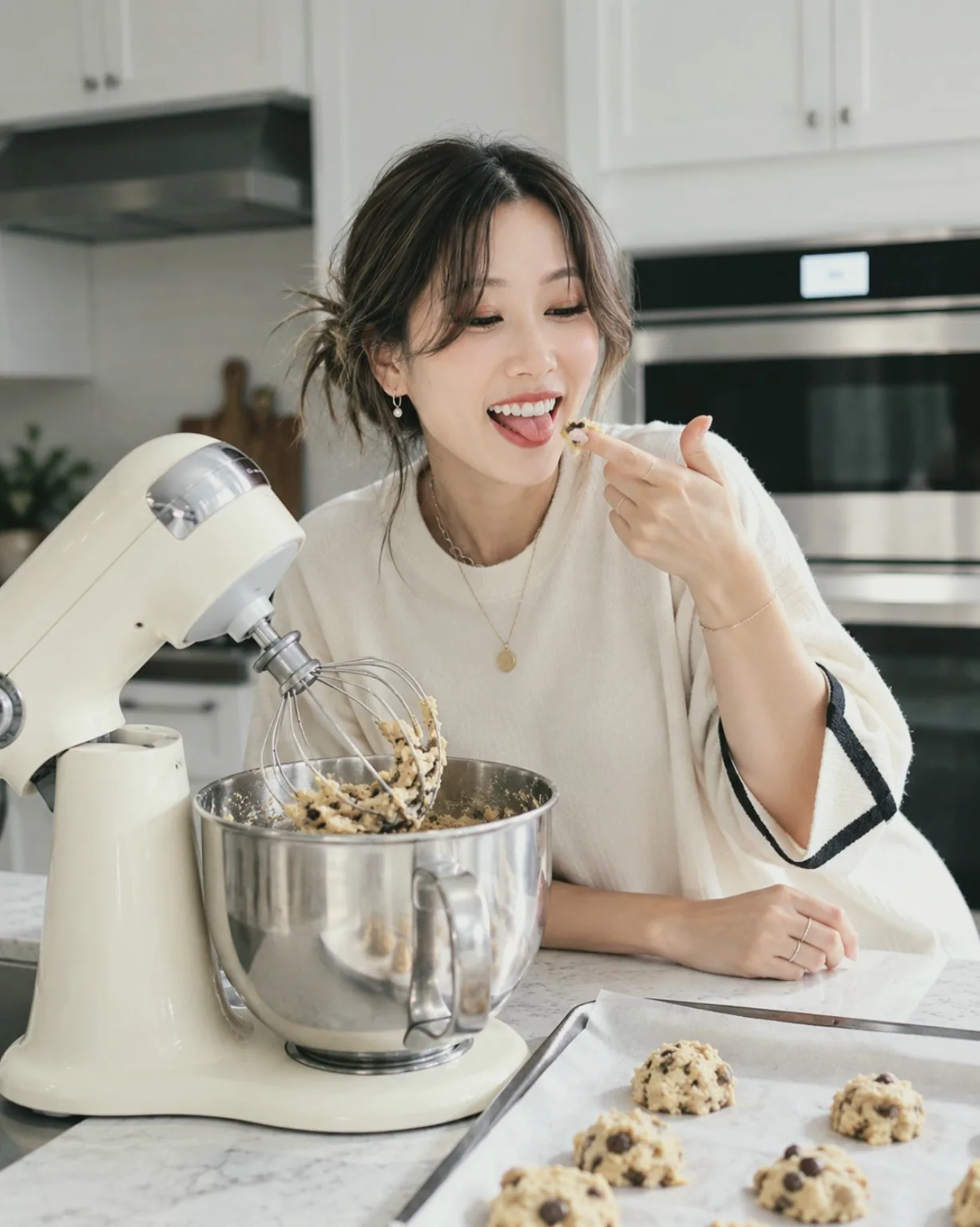
My children don't share one appetite, so I want the pork, kimchi and cabbage filling clearly described. Rice, sliced cucumber or a soy-vinegar dipping sauce can sit alongside the dumplings for people to choose. Set up the wrappers, filling and tray before shaping. I like a hands-on kitchen job more when the space is ready and it isn't competing with the school-lunch rush.
Joy.Fill dumpling wrappers with pork, kimchi and gochujang. Seal clean edges, crisp the bottoms and steam the filling through before serving.
Tap each ingredient as it goes into your basket or bowl.
Follow the steps in order to make this recipe.
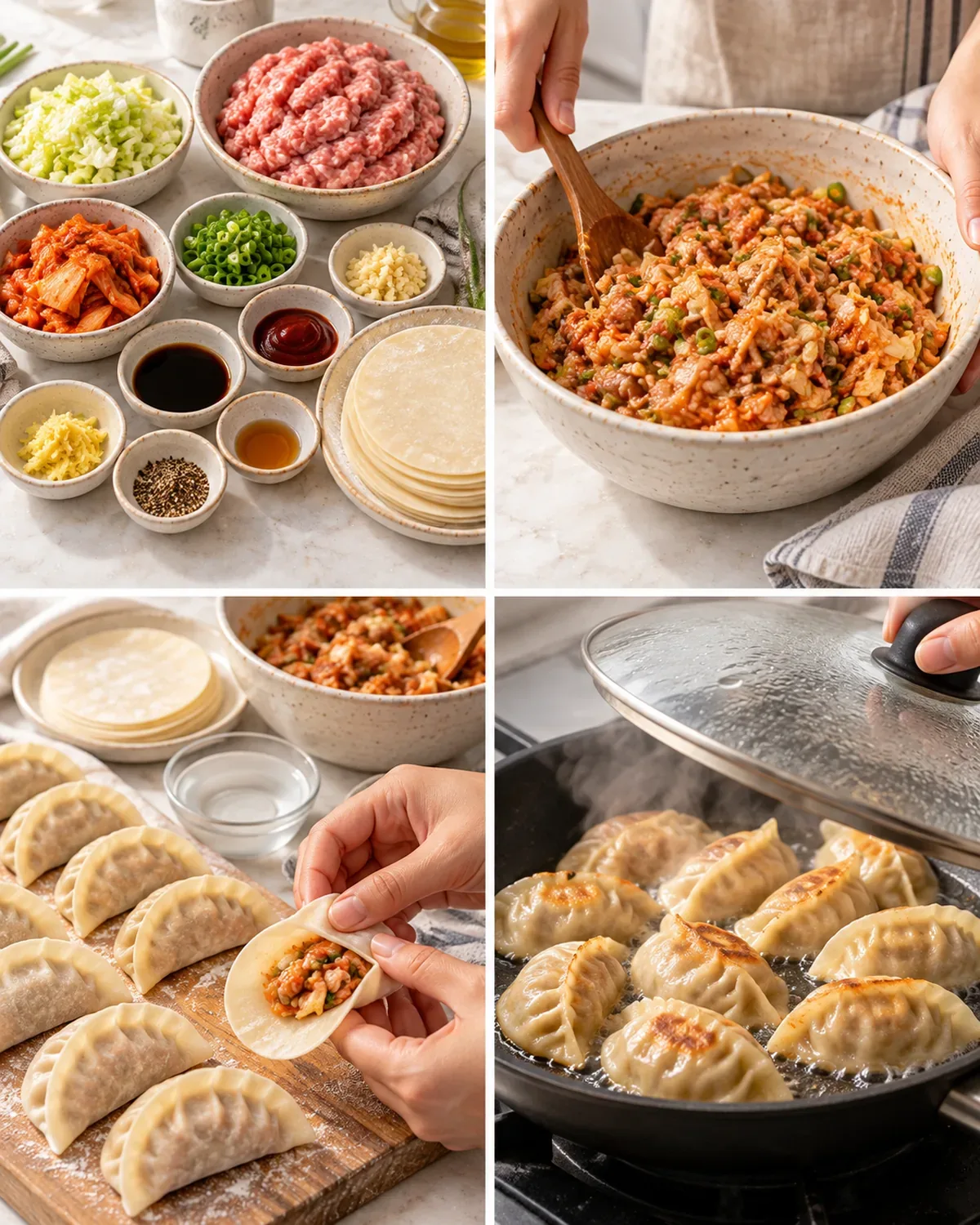
Combine pork, cabbage, kimchi, green onion, garlic, ginger, soy sauce, gochujang, sesame oil and pepper until evenly mixed.
Place about 1 tablespoon filling in each wrapper. Moisten the edge, fold into a half-moon and press to seal.
Heat a little of the measured oil in a nonstick skillet over medium heat. Arrange dumplings flat-side down in a single layer without crowding and cook until the bottoms are golden, about 3 minutes. Work in batches, adding more of the measured oil as needed.
Carefully add enough water to cover the skillet base with a shallow layer and cover immediately. Steam for about 6–8 minutes, adding a small splash of water if the pan dries before the filling cooks. Check the center of the pork filling reaches 160°F with a food thermometer; continue steaming if needed. Uncover and let the remaining water evaporate to re-crisp the bottoms. Repeat with the remaining dumplings.
Fill dumpling wrappers with pork, kimchi and gochujang. Seal clean edges, crisp the bottoms and steam the filling through before serving.
Joy’s kitchen note · My children don't share one appetite, so I want the pork, kimchi and cabbage filling clearly described. Rice, sliced cucumber or a soy-vinegar dipping sauce can sit alongside the dumplings for people to choose. Set up the wrappers, filling and tray before shaping. I like a hands-on kitchen job more when the space is ready and it isn't competing with the school-lunch rush.