Time15 min prep + 25 min cooking
Makes4 servings
CategoryAsian Fusion
Tastefully Planned,
Joyfully Cooked.

Simmer Korean army stew with kimchi, cooked meats, tofu and mushrooms. Add ramen near serving time and taste the broth before adding salt.

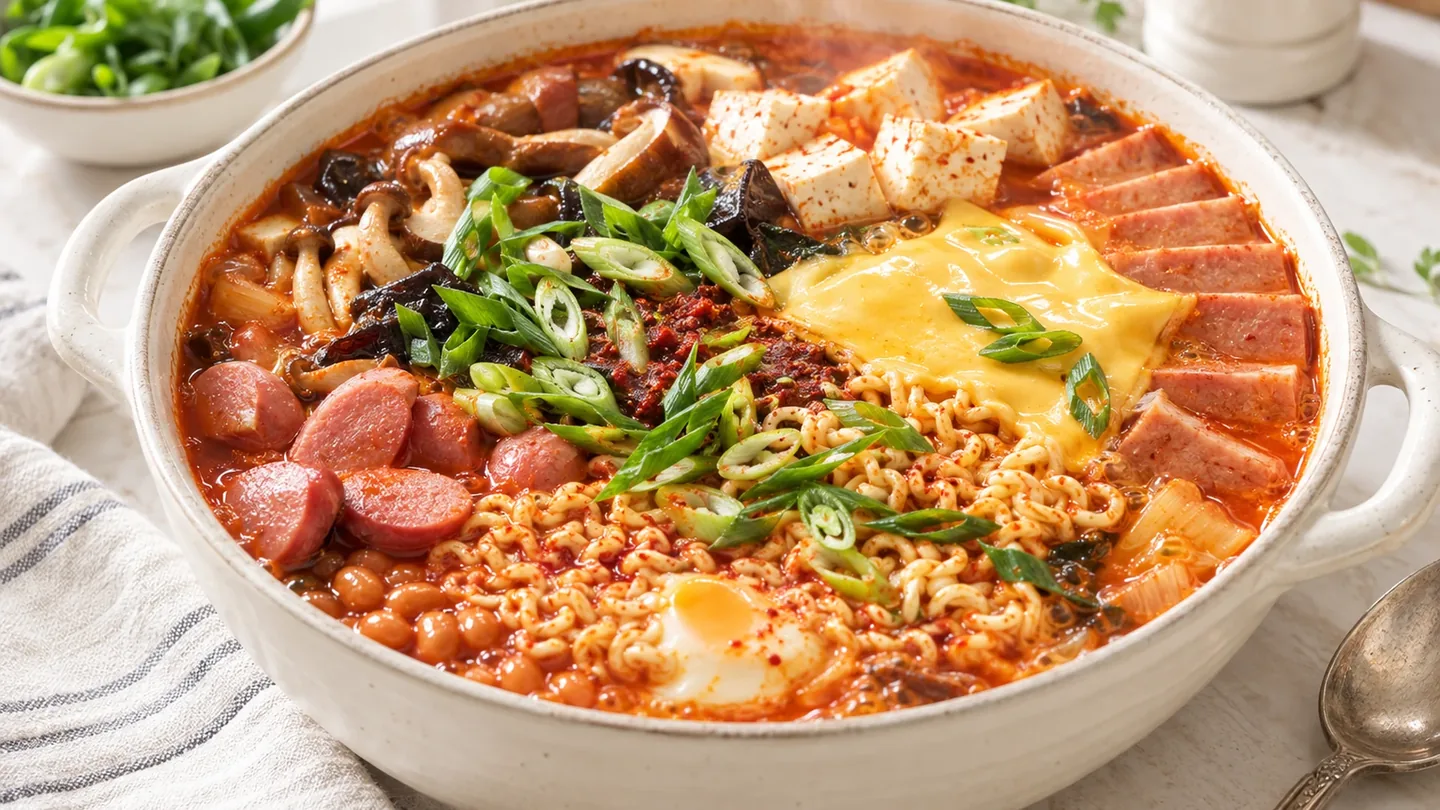
A shared pot with room for different bites
Korean army stew brings several bold ingredients into one bubbling pot: kimchi, chile paste, sausage, luncheon meat, tofu and a final tangle of ramen. The pleasure is in their differences. Tofu takes on the broth, mushrooms add a softer earthy bite, and the meats contribute savory richness. A wide pot lets you see those parts before they mingle, which makes serving easier and keeps the meal from feeling like an anonymous bowl of noodles.
I grew up in Seoul, where a shared pot is a familiar way to think about a meal, and that idea still fits my American kitchen. Sharing a main dish does not require every bowl to contain exactly the same pieces. This recipe serves four, with one package of ramen shared throughout the stew alongside the other ingredients. A simple side can complete the table while the pot remains the clear center of the meal.
Step 1: Choose and prepare the stew pot
A wide pot gives the ingredients room to sit in visible groups and makes it easier to lower the ramen into the broth near the end. It should also have enough depth and headroom for simmering without frequent splashes over the edge. Check the total volume before arranging everything; a pot filled almost to the rim is difficult to stir and awkward to serve from safely.
Set the pot on a stable burner and use utensils long enough for the job. You will need to reach the vegetables and noodle cake without putting your hand directly over rising steam. If you intend to carry the finished pot to the table, plan a heat-safe landing place first. The recipe cooks on the stove, and a shared-table feeling does not depend on improvising an unfamiliar tabletop burner at the last minute. Calm handling is more useful than dramatic bubbling during serving.
Let low-sodium broth support the seasonings
The recipe specifies low-sodium chicken or vegetable broth because several other ingredients already bring salt. Soy sauce, kimchi, gochujang, sausage and luncheon meat all contribute to the final broth. Starting with a very salty stock makes that combination harder to balance. Choose chicken or vegetable broth according to the flavor you prefer, while remembering that the listed meats are still part of the written dish.
Whisk the broth with the seasonings before pouring it into the pot. Gochujang can remain in a thick lump if it is simply dropped among the vegetables, leaving some areas much stronger than others. Dispersing it in the liquid gives every part of the pot a similar starting flavor. Garlic, sugar, soy sauce, gochugaru and kimchi juice should be evenly mixed as well. This small step prevents a lot of unnecessary stirring once the arranged ingredients are in place.
Gochujang and gochugaru offer different qualities
Gochujang gives the broth fermented savory depth, chile flavor and some sweetness. Gochugaru contributes a more direct red-pepper character and a different texture. They are not interchangeable spoon for spoon, which is why both appear in the recipe. Check labels and choose products that fit your table, especially if you are buying them for the first time. Their heat levels can vary across brands.
The teaspoon of sugar helps round out the acidity and chile in the broth while keeping the finished stew savory. Kimchi acidity, chile and savory meats all affect the final impression. Begin with the written amounts and taste the cooked broth before making any optional adjustment. Adding more soy sauce early can be especially tempting when the broth seems light, but the meats and kimchi continue contributing flavor as they simmer. Give the assembled pot time to become the dish it is meant to be.
Step 2: Arrange meats and tofu with purpose
The sausage is cooked sausage, and the luncheon meat is sliced as listed. Their role is to heat through and season the broth, not to serve as raw meat that needs an entirely different cooking plan. Choose slices that are easy to lift into a bowl and eat with the tofu and vegetables. Overly thick pieces can feel separate from the rest of the stew, while extremely thin fragments can disappear into it.
Firm tofu holds its shape better than a very delicate tofu during arrangement and serving. Handle the cubes gently so they remain recognizable instead of breaking into small crumbs before the simmer begins. Grouping the tofu and meats around the pot makes them easier to portion later. It also lets people see the choices in the shared dish. The goal is an organized starting arrangement, not a display that must remain untouched throughout cooking.
Step 3: Add the kimchi and mushrooms
Chopped kimchi supplies acidity, chile and cabbage texture. The measured kimchi juice carries some of that flavor directly into the broth. Different jars can be more sour, salty or spicy, so taste a small piece beforehand to understand the starting ingredient. Use the written amount rather than adding a large extra pour of brine simply because it is available in the jar.
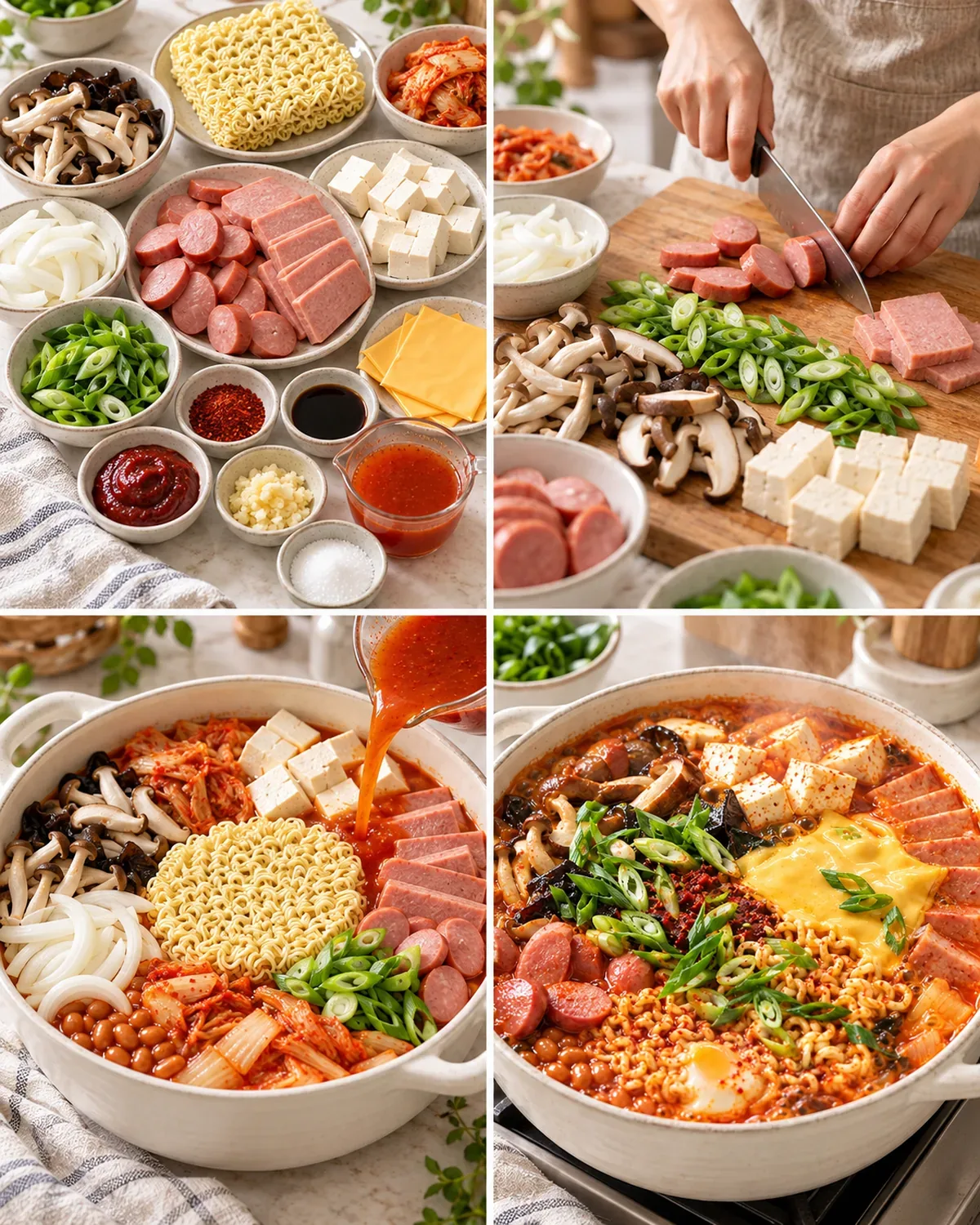
Mushrooms and sliced onion soften in the simmer and provide a different bite from the meats and tofu. Slice them evenly enough to cook at a similar pace. The vegetables should become tender while still being easy to recognize in the pot. Their role is more than decoration, so distribute them where broth can reach them. A dense dry mound above the liquid will cook differently from ingredients comfortably nestled into the simmering broth.
Step 4: Simmer before introducing the ramen
Bring the assembled pot to a boil, then reduce it to the stated simmer. An aggressive rolling boil is unnecessary and can jostle tofu apart while liquid evaporates quickly. Watch how the broth moves: a controlled bubble allows the vegetables to soften and the flavors to mingle without turning the pot into a splashing project. Check the vegetables and make sure the meats are hot before moving on.
This is a useful window to set out bowls, spoons and any simple side. Once the ramen enters, the meal is close to serving. Do not add it early merely to make the pot look finished. Noodles continue taking up broth and softening as they sit, so an early addition can leave you with a much thicker, softer dish than intended. The simmering stage and the noodle stage have different jobs and should stay separate.
One noodle cake is enough for its role
Use the ramen noodle cake and omit the seasoning packet as the recipe directs. The broth already has its own seasoning structure, and the packet can change both saltiness and flavor substantially. Check the package before cooking so it does not get tipped into the pot automatically. Keep the noodle cake accessible while the vegetables simmer, ready for the short final cooking stage.
As the ramen softens, ease it into the broth and separate the strands gently. The stated cooking time provides a guide, but look for noodles that are cooked and still pleasant to lift. Serve close to this point rather than leaving the pot on heat while waiting for everyone to arrive. If dinner timing is uncertain, delay the noodle addition. That simple choice preserves more control than trying to reverse noodles that have absorbed a large share of the broth.
Step 5: Finish and share without making every bowl identical
Green onions add freshness at the end. Optional cheese melts into the top and makes the broth feel rounder and richer, but the stew is already complete in flavor without it. Decide whether to use it according to the meal you want and the preferences at the table. If people differ, cheese can be handled in a way that keeps the optional choice clear rather than assuming the whole pot needs it.
When serving, distribute broth along with the solids and check that the tofu, vegetables and meats are shared reasonably. A person who wants more tofu or fewer noodles can still participate in the same meal. Use a clean ladle and serving utensil for the pot rather than individual eating utensils. Smaller first servings leave room to choose another combination afterward and can reduce the amount of food left in bowls at the end.
Plan purchases around the partial packages
This recipe uses modest amounts of several packaged ingredients, which is convenient only when the remaining food has a plan. Check the sizes of the tofu, sausage and luncheon-meat packages before shopping. Follow their labels for storage after opening, and decide what another meal will use. A few ounces left without a destination are easy to overlook once the stew is finished.
The remaining mushrooms, onion and green onions can support a simpler dish later in the week. Keep those ingredients visible and note what has already been opened. Higher grocery costs make me think about the whole purchase rather than just the amount used in one recipe. The stew already has a varied ingredient list, so there is little reason to buy several extra toppings. Make the written ingredients work well before adding more items to the refrigerator.
Store with the noodles in mind
Ramen keeps absorbing liquid after cooking, so leftovers will not have exactly the same broth-to-noodle balance as the first serving. If you know only part of the stew will be eaten now, plan how much needs noodles before the final stage rather than assuming a fully cooked pot will hold its texture indefinitely. Keep any separately saved cooked components appropriately handled and refrigerated; separating food is a texture strategy, not a substitute for cold storage.
Refrigerate leftovers promptly in suitable covered containers and reheat portions thoroughly for a later hot meal. Avoid leaving a large warm pot out while waiting for the evening to end. When reheating, assess the consistency and add a modest amount of suitable liquid if needed, then taste before adding more salty seasoning. The next bowl may be softer and thicker, but it can still be a useful planned meal when storage, portions and reheating have been considered from the beginning.
A shared pot feels familiar from growing up in Seoul, but my family still wants different things in its bowls. Arrange the ingredients before pouring in the broth so people can see what's cooking. Keep a simple side nearby and add ramen toward the end. I like that the table can share one pot without needing every serving to contain exactly the same pieces.
Joy.Simmer Korean army stew with kimchi, cooked meats, tofu and mushrooms. Add ramen near serving time and taste the broth before adding salt.
Tap each ingredient as it goes into your basket or bowl.
Follow the steps in order to make this recipe.
Whisk broth with gochujang, gochugaru, soy sauce, garlic, sugar and kimchi juice.
Arrange kimchi, sausage, luncheon meat, tofu, mushrooms and onion in a wide pot. Pour broth over everything.
Bring to a boil, then simmer 12–15 minutes until vegetables are tender and meats are hot.
Add the ramen noodle cake (omit its seasoning packet) and cook 3–4 minutes. Top with cheese and green onion before serving.
Simmer Korean army stew with kimchi, cooked meats, tofu and mushrooms. Add ramen near serving time and taste the broth before adding salt.
Joy’s kitchen note · A shared pot feels familiar from growing up in Seoul, but my family still wants different things in its bowls. Arrange the ingredients before pouring in the broth so people can see what's cooking. Keep a simple side nearby and add ramen toward the end. I like that the table can share one pot without needing every serving to contain exactly the same pieces.