Time10 min prep + 10 min cooking
Makes2 sandwiches
CategoryAsian Fusion
Tastefully Planned,
Joyfully Cooked.

Toast sourdough with tangy kimchi, cheddar and mozzarella for a crisp grilled cheese sandwich. Drain the kimchi well for a gooey, golden melt.

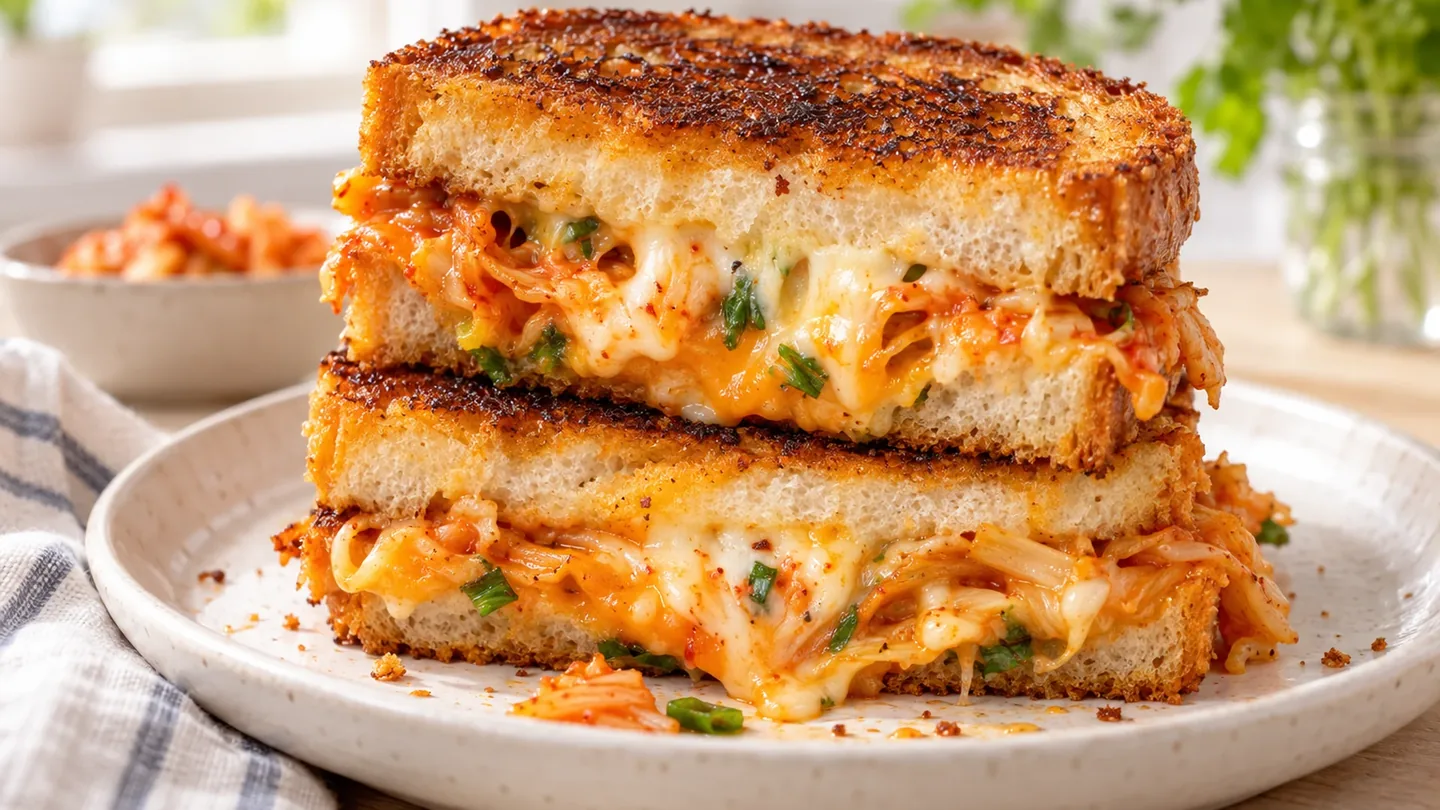
A familiar sandwich with a sharper middle
Kimchi grilled cheese makes sense when you think about contrast. Cheddar brings a strong savory flavor, mozzarella gives a softer, stretchy melt, and kimchi adds acidity and chile between them. The bread browns in butter while the filling warms gradually. It is a small meal with a clear point of view, and it does not require a separate sauce to make the center interesting.
This recipe makes two sandwiches, so it is easy to plan as a lunch for two or a small shared meal with other foods. I like to decide on a simple fresh side before the sandwiches enter the skillet. Have that side ready before the cheese begins melting so the sandwiches can go straight from skillet to plate. A little fruit or vegetables gives the plate another texture without distracting from the warm, tangy center.
Choose bread that can hold the filling
Sourdough and country bread both offer enough structure for the kimchi and two kinds of cheese. Choose slices that are similar in thickness so the two sides brown at a comparable pace. Very thick bread can become deeply colored outside while the middle takes longer to warm. Very thin slices may struggle to hold the filling once you turn the sandwich. A sturdy, comfortable eating slice is the practical goal.
Look at the size of the loaf as well as the number of slices. A large bakery slice can hold much more filling than a small sandwich slice, but the measured recipe still makes two sandwiches. Spread the cheese and kimchi evenly across the usable surface so the filling reaches toward the edges. If your bread has large holes, place the cheese to support the kimchi and keep loose pieces from falling through onto the skillet.
Step 1: Squeeze excess moisture from the kimchi
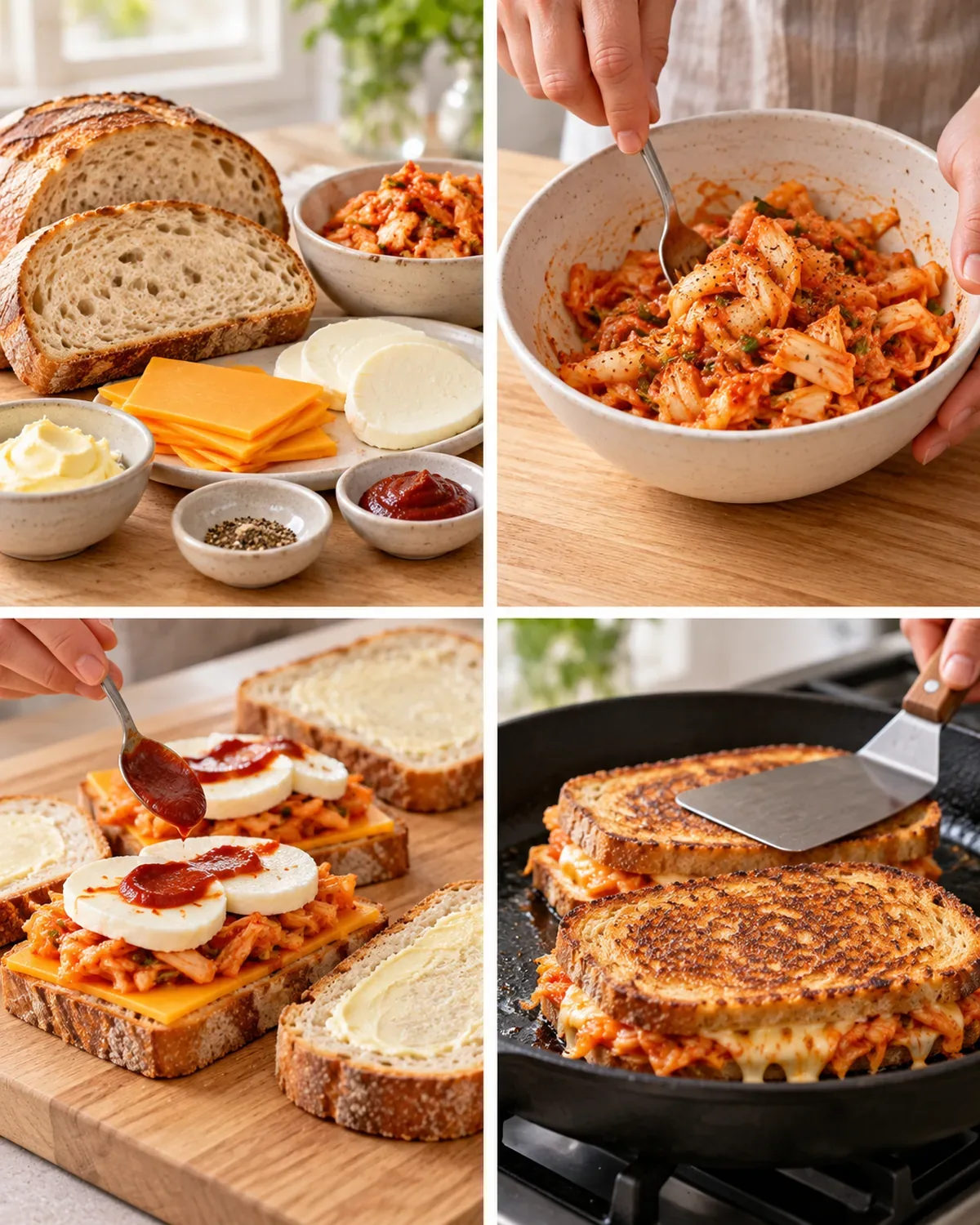
The kimchi should be chopped and squeezed dry as the ingredient list specifies. Its flavor is welcome, but excess brine makes the center wet and pushes the bread toward steaming instead of browning. Work over a bowl or sink so the liquid has somewhere to go. You are removing loose moisture, not trying to turn the cabbage into a completely dry ingredient with no character left.
Cut the pieces to a size that can fit comfortably in a bite. Long strands can pull from the sandwich and drag melted cheese with them, while a very fine paste loses some of the cabbage texture. After squeezing, toss the kimchi with the tiny measured pinch of black pepper for both sandwiches. That distributes the pepper evenly instead of leaving one concentrated patch in a single bite. The kimchi is already strongly seasoned, so there is no need to add an unmeasured layer of salt.
Let the cheeses do different jobs
Sharp cheddar carries much of the savory dairy flavor. Mozzarella contributes the softer melting texture that makes the filling feel cohesive around the cabbage. Using both gives a more rounded result than asking one cheese to supply every quality. Lay the slices so they cover most of the bread and share the space with the kimchi, rather than leaving a thick block in one area and bare bread elsewhere.
Cheese slices vary in size and thickness by brand, so think about coverage while staying with the stated counts. The sandwich should close comfortably without requiring heavy pressure to hold it together. If the filling is very cold, patient skillet cooking becomes especially useful. Turning up the burner to hurry the center usually affects the bread first. The slow movement from a cool pan toward medium heat gives the two cheeses a fair chance to melt as the exterior colors.
Keep gochujang an honest option
The optional gochujang adds another layer of chile flavor and fermented depth. A thin distribution is more effective than a thick spoonful in the middle, especially since the kimchi already provides heat. Choose to include it based on the kimchi you are using and the preferences at your table. The sandwich still has a distinct kimchi identity without it; optional does not mean the rest of the filling needs to be changed.
Gochujang and kimchi both vary across products, so taste a little kimchi before assembling to understand its acidity and heat. The cheese softens the bite, while the kimchi and optional gochujang still bring their own heat. A familiar side can be a welcome companion. Offering the optional paste separately during assembly can accommodate different preferences without turning lunch into two completely different recipes.
Step 2: Butter the outside evenly
Softened butter spreads more evenly than a cold lump and helps the bread make good contact with the skillet. Cover the outside surfaces in a thin, consistent layer, paying attention to the edges. A heavy mound in one spot can melt away while another area remains comparatively dry. The measured butter is intended for the two sandwiches, so divide it across all four outer bread surfaces.
Assemble with the buttered sides facing outward and the filling contained inside. It helps to do this on a board or plate before approaching the pan. Loose kimchi or a dangling cheese corner can fall onto the skillet and darken before the sandwich is done. Tuck the ingredients into a stable shape, then move the sandwich gently. That simple preparation makes turning much easier and reduces the temptation to press so hard that the filling is squeezed out.
Step 3: Begin in a cool skillet
The cool-skillet start is a deliberate part of this recipe. As the pan warms toward medium heat, the bread and filling begin warming together. This gives the cheese time to soften before the outside develops too much color. A very hot preheated skillet can produce an attractive crust quickly, but it may leave a cool, firm center that needs more cooking after the bread has already reached its limit.
Pan material and burner strength affect how quickly that warming happens. Watch the underside rather than relying only on the minute count. The bread should become deeply golden, with the buttered surface crisping instead of simply drying. If it colors much faster than the cheese melts, lower the heat and allow the center to catch up. Calm heat control is more useful than repeated hard pressing or constantly flipping the sandwich before either side has time to brown.
Step 4: Turn gently and let the filling settle
Use a broad spatula that supports enough of the bread to keep the sandwich intact. Lift confidently, turn close to the pan and press only gently as directed. Heavy pressure can push hot cheese and kimchi into the skillet and leave a flatter, wetter sandwich. Check the second side with the same attention as the first; it may cook differently because the pan is now fully warm.
Once both sides are golden and the cheese is melted, move the sandwich to a board and give it the stated rest. Melted filling is very fluid straight from the pan. A brief pause helps it settle so slicing does not immediately send everything onto the board. Use a knife that cuts through the crust without crushing the bread, and handle the hot filling carefully. The rest is a small finishing step that makes the sandwich easier to serve and eat.
Make a small meal feel complete
A sandwich with two cheeses and butter is already rich, so a fresh side can provide a useful change of pace. Sliced cucumber, other vegetables or a portion of fruit can sit beside it without requiring a second cooking project. Keep the portions suited to the people eating. Half a sandwich with several other foods can be a sensible serving in a varied lunch, while a full sandwich may suit a simpler plate.
I bring kimchi into meals because its flavor belongs in my kitchen, but a familiar sandwich format does not mean everyone wants the same amount. A clear description and a smaller initial portion can be more useful than disguising the filling. The goal is one manageable meal with room for choice. You can set out a fresh side and let the warm sandwich remain the main attraction without making another elaborate dish to explain it.
Buy and save with texture in mind
This is a useful recipe for a loaf and cheeses that already have another purpose in the week. Check what is open before buying more, and plan the remaining bread according to how you normally store it. Kimchi also serves other meals, so the jar need not be a purchase for only two sandwiches. Buying ingredients you can use again is more valuable than adding several specialty extras to a recipe that already has a complete flavor.
The sandwich is best soon after cooking, while the bread contrasts with the melted filling. If saving a portion, refrigerate it promptly in an appropriate container and reheat thoroughly for a later hot serving. Expect the bread to soften in storage; a suitable skillet or oven method can restore some surface texture, but the result will differ from fresh. For a packed lunch, keep it properly chilled until eating or reheating and pack fresh sides separately so they do not add more moisture to the bread.
My son enjoys kimchi, while my daughter is much more cautious, so I want the filling clear before offering this sandwich. Squeeze extra liquid from the kimchi so the bread browns instead of steaming. Cook gently enough for the cheese to melt. I also think about a little fruit or vegetables beside a packed sandwich; the warm, cheesy middle doesn't have to be the whole lunch.
Joy.Toast sourdough with tangy kimchi, cheddar and mozzarella for a crisp grilled cheese sandwich. Drain the kimchi well for a gooey, golden melt.
Tap each ingredient as it goes into your basket or bowl.
Follow the steps in order to make this recipe.
Spread butter on the outside of each bread slice. Toss the squeezed-dry kimchi with 1/16 teaspoon finely ground black pepper for both sandwiches. Layer cheddar, the seasoned kimchi, mozzarella and gochujang if using.
Place sandwiches in a cool skillet and turn heat to medium. This helps the cheese melt as the bread browns.
Cook 3–4 minutes per side, pressing gently, until deeply golden and the cheese is melted.
Rest for 2 minutes before slicing so the melted filling settles.
Toast sourdough with tangy kimchi, cheddar and mozzarella for a crisp grilled cheese sandwich. Drain the kimchi well for a gooey, golden melt.
Joy’s kitchen note · My son enjoys kimchi, while my daughter is much more cautious, so I want the filling clear before offering this sandwich. Squeeze extra liquid from the kimchi so the bread browns instead of steaming. Cook gently enough for the cheese to melt. I also think about a little fruit or vegetables beside a packed sandwich; the warm, cheesy middle doesn't have to be the whole lunch.