Time15 min prep + 20 min marinating + 15 min batch cooking (prep overlaps)
Makes4 servings · 8 tacos
CategoryAsian Fusion
Tastefully Planned,
Joyfully Cooked.

Fill warm tortillas with pear-marinated bulgogi beef and crisp toppings. Cook the beef in batches and let everyone build their own Korean-inspired tacos.

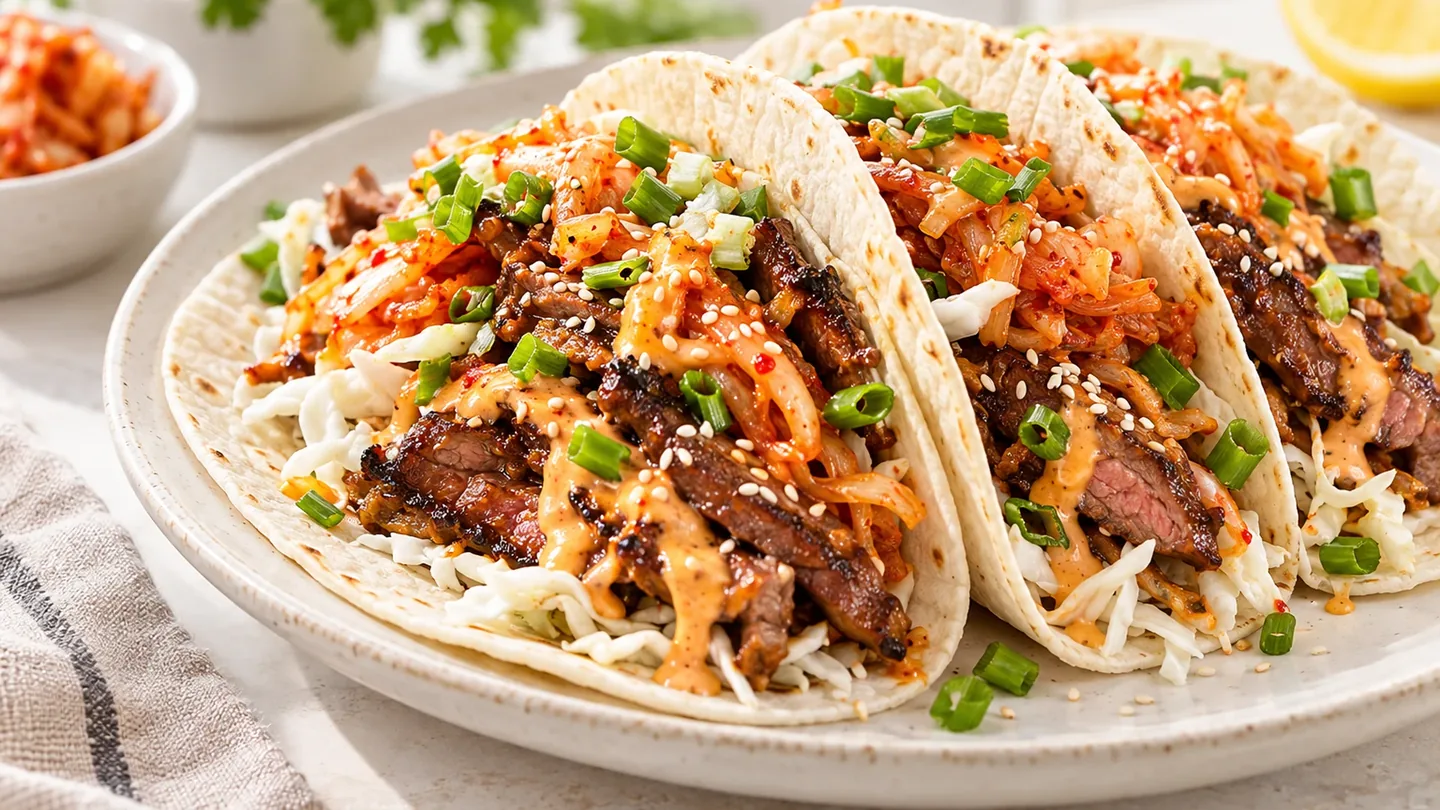
Bulgogi in a familiar tortilla
These tacos bring pear-marinated beef together with a crisp cabbage topping and a warm tortilla. The beef carries the savory sweetness of soy sauce, fruit, brown sugar and sesame oil; the cabbage adds a simple vinegar edge. Keeping those parts distinct makes the taco lively without needing a long list of condiments. Cilantro and green onion finish it with a fresh note that suits the quick, hot cooking.
I like the way this meal connects Korean flavors with an everyday American format. It does not require the tortilla to become anything other than a useful wrapper, and it gives the beef a clear place at the center. The recipe makes eight tacos for four servings. Plan the rest of the plate around the actual size of your tortillas and the appetites at your table, with a simple vegetable or fruit side if that completes the meal.
Step 1: Slice the beef thinly
The recipe uses sirloin cut into thin slices. Thinness helps the beef cook quickly and makes it easier to bite through inside a taco. A thick strip can pull out of the tortilla in one piece, taking the filling with it. Look for a cut you can slice evenly, and notice the direction of the muscle grain before cutting. Slicing across that grain shortens the fibers and improves the eating texture.
The kitchen note suggests partly freezing the beef to make slicing easier. The aim is firmness that supports the knife, not a solid block that requires force. Use a sharp knife and a stable board, and keep the slices reasonably similar. If you buy presliced beef, separate any tightly packed layers before coating them in marinade. A thick folded cluster will behave like a much larger piece in the pan, even if the package describes the beef as thinly sliced.
Pear and apple bring gentle sweetness
Grated Asian pear adds fruit sweetness and moisture to the marinade. Apple is an allowed alternative, so choose it when it fits what you already have. Either way, grate the measured amount finely enough to distribute through the sauce. Large fruit chunks are not the goal; they can collect in the pan and cook separately while much of the meat receives only the liquid seasonings.
The recipe needs only a small portion of fruit, which makes this an easy place to plan ahead. Set aside the remainder for eating fresh or another meal, with a plan to use the cut fruit while it is still in good condition. There is no need to buy a large quantity of specialty fruit just for a few tablespoons. Use the written alternative with confidence when it makes the grocery list more practical, while recognizing that different fruits bring slightly different sweetness and texture.
Step 2: Mix the marinade before adding meat
Soy sauce, fruit, sugar, sesame oil, garlic, ginger and pepper should be well combined before the beef goes in. Stir until the sugar is evenly distributed through the liquid, checking the bottom of the bowl for any gritty layer. The marinade has enough flavor to coat thin beef without needing a separate finishing sauce. Keep the measured proportions as your starting point, especially with soy sauce, where an extra generous pour can quickly change the saltiness.
Turn the slices through the mixture so the surfaces are exposed, then give them the stated marinating rest. For food handling, keep the beef refrigerated during that interval rather than leaving it beside a warming stove. Use the time to prepare cabbage, slice the green onions and arrange the tortillas. A short organized marinade is useful because it creates a natural pause in which the rest of the taco components can become ready.
Step 3: Prepare the cabbage topping
Shredded cabbage dressed with rice vinegar and a pinch of salt provides contrast to the beef's sweet-savory coating. It does not need mayonnaise or another rich ingredient to do its job. Cut the shreds to an easy eating length so the topping can fit inside a small tortilla. Very long strands can make a taco awkward, even if they look attractive in the serving bowl.
The cabbage will soften slightly as it sits in the vinegar, which is part of its role here. Toss it while the beef marinates, then use a slotted serving utensil or lift it from any collected liquid when building tacos. A wet handful can make the tortilla soggy and dilute the concentrated beef flavor. Keep the topping separate until assembly, particularly if you expect some of the meal to become lunch rather than dinner.
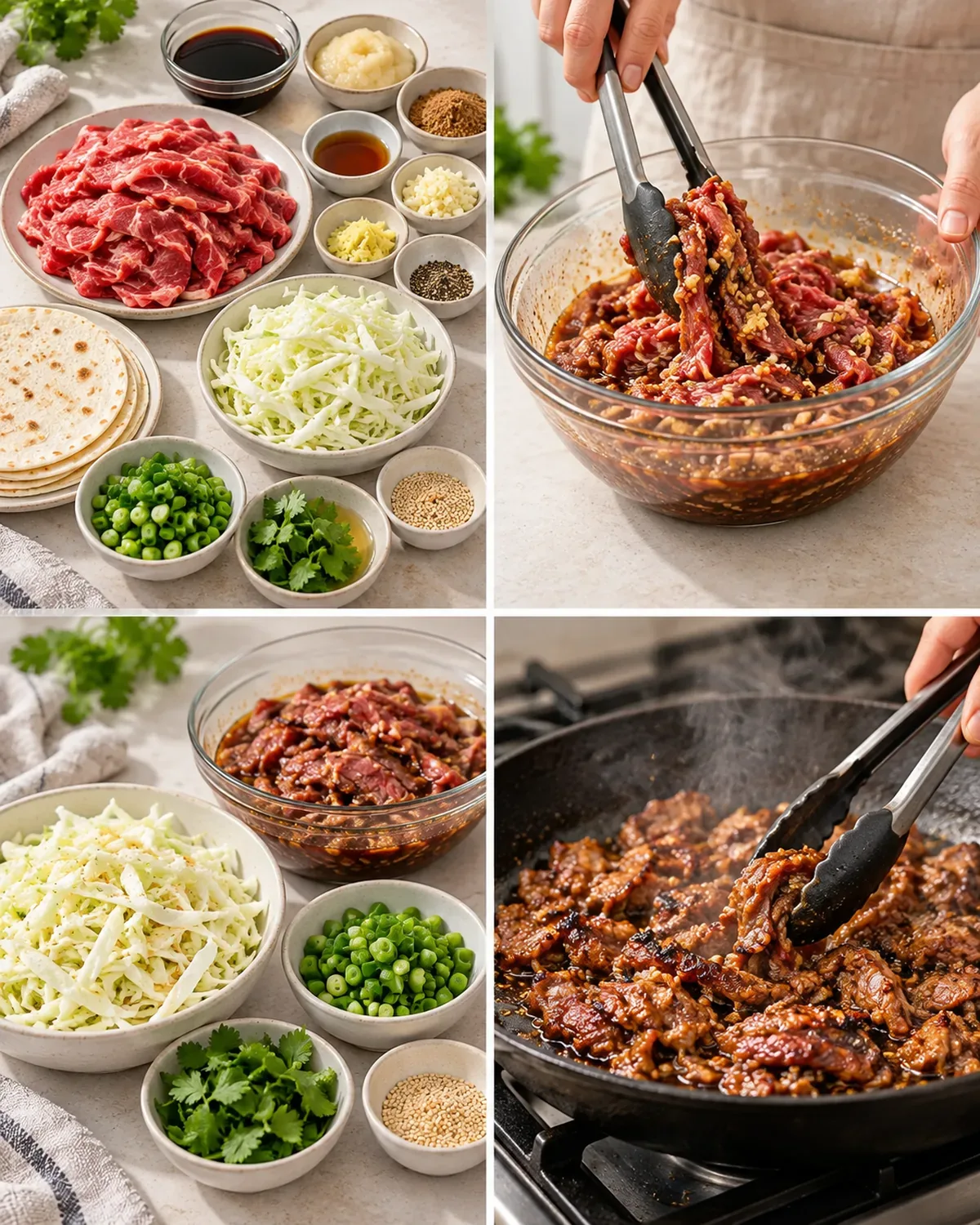
Step 4: Cook in batches for browned edges
The skillet should be hot before the beef enters. A thin layer of meat in good contact with the pan can brown quickly; a deep pile releases liquid and is more likely to simmer. Work in batches as the method directs, and separate slices with your cooking utensil so they do not remain folded together. Each batch needs enough room for heat and moisture to move around the pieces.
The fruit and brown sugar help create lightly caramelized edges, but they can also darken quickly. Watch the pan and move the beef as needed rather than stepping away after setting a timer. If a patch of marinade begins to scorch, lower the heat enough to regain control before continuing. The target is browned beef with a savory aroma, not a bitter black coating. Batch cooking takes a little patience, but it is the step that gives these tacos their intended texture.
Step 5: Warm tortillas with assembly in mind
Flour and corn tortillas both fit the recipe, though they have different flavor and flexibility. Choose the kind you enjoy and warm them according to their needs. Cold tortillas can feel stiff, and some corn tortillas are especially likely to crack if folded without warming. A small stack kept appropriately covered for serving is easier to manage than returning to the stove for every individual taco.
Check the size of the tortillas before judging how much filling belongs in each. The recipe is written for small tortillas, so a large wrap changes the distribution of beef and cabbage. Divide the cooked beef roughly across the eight tacos instead of filling the first few generously and leaving the rest sparse. Keep the warm tortillas away from cabbage liquid. The best taco is one you can hold and eat without the bottom turning wet before you finish.
Step 6: Let the finishing ingredients stay fresh
Green onions, cilantro and sesame seeds complete the tacos without another sauce-making step. Thinly slice the onions and use cilantro leaves in manageable pieces so they can share a bite with the beef. Sesame seeds add a little toasted texture against the soft tortilla. Put the garnishes on the table if people prefer different amounts; the main beef and cabbage combination remains clear either way.
Do not assume every taco needs every possible topping to feel complete. The written ingredients already provide richness, acidity, fresh herbs and crunch. Adding several strong condiments can cover the fruit and sesame in the marinade that you took time to prepare. Begin with the recipe's combination, then let individual portions guide optional choices. Clear flavors also make it easier to offer a simpler taco to someone who is cautious about unfamiliar ingredients.
A useful plan for the remaining groceries
A small cabbage, a bunch of cilantro and a piece of ginger can support more than one meal if their next use is decided early. Cabbage may become a simple salad or a cooked vegetable, while green onions can finish eggs or noodles. Store the remaining produce in a way that keeps it visible. Buying a whole head may be economical when you use it; buying a smaller prepared portion can be sensible when the alternative is waste.
For the beef, compare the actual amount needed with the package you are considering. Extra sirloin should have its own storage and meal plan rather than automatically going into the marinade and changing the recipe's balance. Higher grocery costs make this sort of planning worthwhile to me. It is not about making every meal elaborate. It is about letting the ingredients you have already paid for turn into meals people can reasonably finish.
Save components for a better second serving
Tacos are easiest to enjoy freshly assembled, when the tortilla is warm and the cabbage still has contrast. If you expect leftovers, save beef, cabbage and tortillas separately. Refrigerate the cooked beef promptly in a covered container and reheat it thoroughly for a later hot serving. Warm the tortillas separately, then add the chilled cabbage and fresh garnishes near eating time.
Thin beef can become firmer with repeated heating, so reheat only the portion you need rather than warming the whole container again and again. For packed lunches, keep the components appropriately chilled until eating or reheating, and do not rely on a closed tortilla to protect perishable filling. A small container of cabbage beside the beef gives you more control over moisture. That practical separation preserves the point of the dish: warm savory beef, a soft wrapper and a clean, crunchy finish.
These tacos bring my two food worlds together in a way I enjoy thinking about for family lunches. Slice the beef while it's partly frozen to make thin, even pieces, then let the cabbage and sauce stay separate until assembly. My daughter can choose a simpler taco and my son can add more. A little fruit or vegetables beside them makes room for the rest of the meal.
Joy.Fill warm tortillas with pear-marinated bulgogi beef and crisp toppings. Cook the beef in batches and let everyone build their own Korean-inspired tacos.
Tap each ingredient as it goes into your basket or bowl.
Follow the steps in order to make this recipe.
Whisk soy sauce, pear, brown sugar, sesame oil, garlic, ginger and pepper. Toss with beef and rest 20 minutes.
Toss cabbage with rice vinegar and a pinch of salt. Set aside while the beef cooks.
Heat a skillet over high heat. Cook beef in batches until browned and lightly caramelized, 3–5 minutes.
Warm tortillas and fill with beef, cabbage, green onion, cilantro and sesame seeds.
Fill warm tortillas with pear-marinated bulgogi beef and crisp toppings. Cook the beef in batches and let everyone build their own Korean-inspired tacos.
Joy’s kitchen note · These tacos bring my two food worlds together in a way I enjoy thinking about for family lunches. Slice the beef while it's partly frozen to make thin, even pieces, then let the cabbage and sauce stay separate until assembly. My daughter can choose a simpler taco and my son can add more. A little fruit or vegetables beside them makes room for the rest of the meal.