
Boyangsik
보양식
A Korean word for foods that people have traditionally chosen in particular seasons, often around a shared table. Here, the emphasis is the dish, the occasion and the story.
In Korea, there are meals we choose because they fit a moment: a hot bowl on a punishing summer day, something simmered slowly for a family gathering, or a gentle porridge set before someone whose appetite is small. Boyangsik (보양식) is a word often used around that idea. It is commonly translated as “nourishing food,” but the English phrase alone misses the calendar, the conversation and the care at the table.
I grew up with Korean food as part of everyday life and now write for a kitchen that moves between Korean roots and an American family table. This guide is my way of introducing the dishes and the customs behind them. It is a food culture essay, not a claim that a particular meal can cure illness or deliver a guaranteed effect. The most useful question here is not “Which food has a miracle ingredient?” It is “Why did this dish become the one people chose to share?”
What does boyangsik mean?
The Korean syllables are 보양식, usually written boyangsik in romanization. In ordinary conversation, the term points to food associated with looking after oneself through a season or a demanding stretch of life. People may use it when planning a meal for the hottest days, suggesting a restaurant for parents, or offering a carefully cooked bowl to someone who needs a comfortable dinner. The meaning is cultural and social before it is a menu category.
That is why the answer changes with the person speaking. One diner imagines a small chicken in a bubbling pot. Another thinks of eel at a grill restaurant, with fresh perilla leaves and ginger ready for a wrap. Someone from a coastal family might think first of abalone porridge. Duck can arrive as a long-simmered soup or as thin slices sizzling on a pan. None of those pictures is the single official definition of Korean nourishment.
It is also easy to misunderstand the word from the outside. Boyangsik does not simply mean “low calorie,” “organic,” “superfood,” or “anything with vegetables.” Some celebrated examples are rich; others are quiet and soft. A dish can be special because of the time spent making it, the ingredient that was saved for the occasion, or the fact that everyone sat down together. Everyday rice, greens, fruit and water matter too, even when they have no dramatic name attached.
I want to keep that distinction clear on TastefullyJOY. This page introduces food traditions and practical ways to recognize the dishes. It does not relabel every cozy soup or every protein-rich recipe as Korean boyangsik. When I link a recipe elsewhere on the site, it is an invitation to cook something related, not a medical endorsement or a claim that it is the exact dish described here.
Why do steaming bowls appear in the heat?
Summer is the season most closely associated with boyangsik in Korea. Sambok (삼복) names three traditionally hot points in the season: chobok (초복), jungbok (중복) and malbok (말복). The dates change from year to year. People often call each one a boknal (복날), a day when a restaurant serving chicken soup or grilled eel may be particularly busy. The calendar gives people a familiar reason to make plans: “It’s boknal. What shall we eat together?”
To a visitor, hot soup on a hot day can sound upside down. Yet the contrast is part of the custom. A covered pot arrives steaming; the lid comes off; rice and chicken are eaten slowly while the room hums with conversation. The Korean expression iyeol chiyeol (이열치열), often explained as meeting heat with heat, is commonly invoked around this experience. It is a way people talk about the ritual, not proof that everyone’s body responds to a bowl in the same way.
Summer food in Korea is not only hot. A cold bowl of kongguksu, noodles in a creamy soybean broth, or chilled noodles on another day can be just as welcome. Some diners want a fiery soup; others want a refreshing bowl and a slice of fruit. Families may choose a meal by appetite, weather, budget and who is coming. The tradition remains recognizable even as the actual table changes.
Nor does boyangsik disappear after malbok. A family can enjoy chicken soup in winter, grill eel for a celebration, or cook porridge on an ordinary evening. Food words can have a strong seasonal association without being restricted to one date. If you live far from Korea, there is no need to wait for a particular calendar square to understand the pleasure of sharing a pot.
Think of boknal as a prompt to gather and pay attention to the season. The dishes are real foods with distinct ingredients, textures and histories; the day is an occasion, not a health prescription.
Samgyetang (삼계탕): a small chicken, a whole occasion
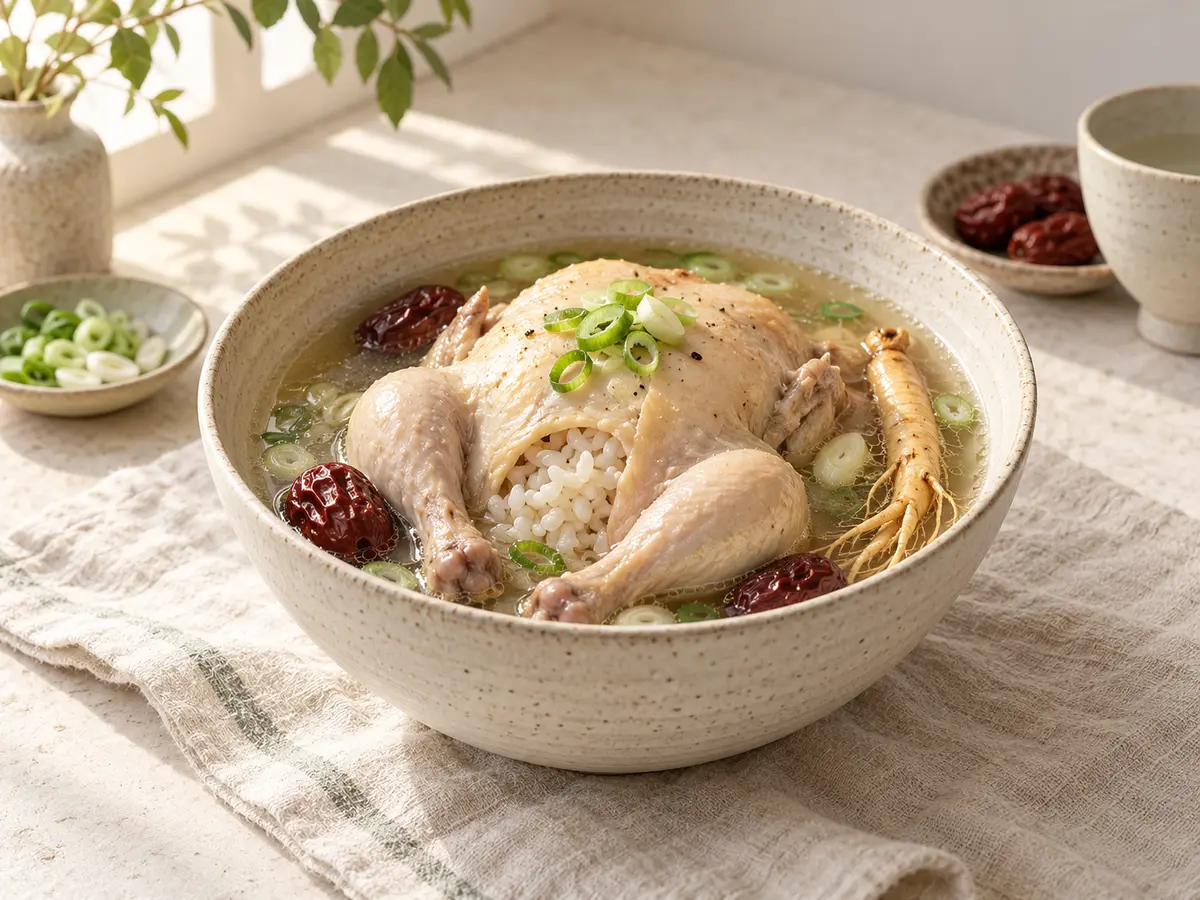
Samgyetang is the dish many people picture first. A small whole chicken is usually filled with glutinous rice and simmered with ingredients such as ginseng, garlic and jujubes. In the bowl, it looks generous and almost ceremonial, but its seasoning can be surprisingly restrained. Rather than coating the chicken in a bold sauce, the cook lets the broth, the bird and the aromatic ingredients speak. Salt and pepper are often adjusted at the table.
There is a rhythm to eating it. The pot is set down very hot. A spoon breaks into the rice tucked inside the chicken; the broth softens each bite; a small side dish adds brightness between spoonfuls. One person might eat the chicken first and save the rice for later. Another might pull the meat into the broth from the beginning. That choice is part of the pleasure: everyone receives a complete bowl but can eat it at their own pace.
The name is specific. Sam points to ginseng, gye to chicken, and tang to soup. A plain chicken baeksuk can be delicious and shares the idea of a gently simmered bird, but it is not automatically the same dish. Restaurants and homes have their own variations. Some add chestnuts, others include abalone, and some use a rice-rich broth that becomes almost creamy. The recognizable core remains the chicken and the warm, subtly fragrant soup.
It is tempting to tell the story as if every Korean family has always eaten exactly this version on every boknal. Food history is rarely that neat. Chicken soup traditions and the use of ginseng developed over time, while the present-day restaurant image of samgyetang became especially familiar in modern Korea. The most honest way to introduce it is as a living summer favorite rather than an unchanging ancient recipe.
If you are exploring it at home, the key culinary questions are practical: Is the bird small enough for the pot? Is the rice completely cooked? Is the broth seasoned only after you taste it? Whole poultry requires careful handling and thorough cooking. If ginseng is not an ingredient you normally use, begin by learning how the broth is built before changing it beyond recognition.
I like the way a samgyetang table can feel both substantial and simple. There is the main bowl, perhaps kimchi, a few greens or cucumber on the side, and time to eat. You do not need a dozen elaborate side dishes for the meal to feel considered. That quiet balance is one reason the dish belongs in a conversation about care.
Jangeogui (장어구이): grilled eel, ginger and a leaf to wrap it in
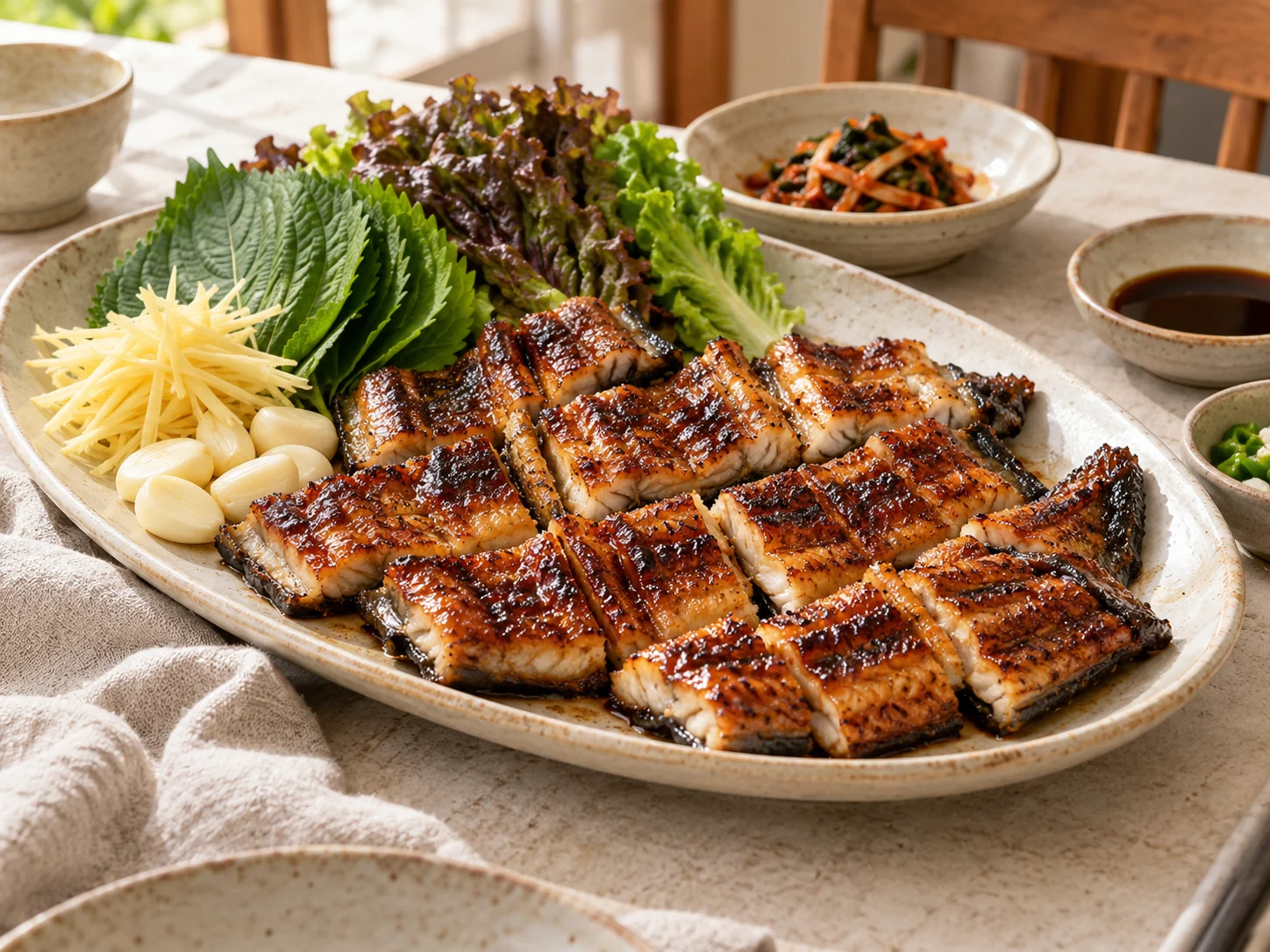
Eel tells a different boyangsik story from chicken soup. Jangeogui means grilled eel. At a grill restaurant, the surface may be lightly charred while the flesh stays rich and tender. Some versions are simply seasoned with salt; others wear a sweet-savory sauce. The choice changes the first impression, but either way the meal is about more than the fillet. Ginger, garlic, leafy greens and a small dipping sauce can turn a rich bite into a lively one.
For someone new to eel, the wrap is an approachable starting point. Put a piece of grilled eel on a lettuce or perilla leaf, add a few threads of ginger and perhaps a little garlic, fold it and eat it in one bite. The ginger cuts through the richness; the leaf brings a fresh fragrance; rice can follow when you want something plain. Not every restaurant serves the same set of accompaniments, and you can taste the eel by itself first.
There is regional character here too. Freshwater eel is associated with places such as Gochang, while coastal areas have other eel preparations and soups. “Jangeo” on a menu can lead to different species or styles depending on the place. A charcoal-grilled plate, a spicy eel soup and a gently salted fillet are related but distinct experiences. Asking how the kitchen prepares its eel is a better guide than assuming that one glossy photograph represents every version.
At home, eel is an ingredient to buy from a reliable seafood seller and handle with care. Many markets offer it cleaned or prepared for grilling, which makes the meal more approachable. A glaze can burn before the fish is cooked if it is applied too early; the simpler salted style lets you notice the eel itself. Those are general cooking observations, not a measured TastefullyJOY recipe. I would rather give a reader an honest introduction than pretend a restaurant tradition can be reproduced by a few vague lines.
The table around eel is sociable. Pieces come off the grill, somebody passes more leaves, a bowl of rice waits nearby, and the plate can be shared in rounds. Its place among summer boyangsik is easy to understand without promising anything about stamina: the occasion feels deliberate, the food is memorable, and the accompaniments keep the meal moving.
Ori-roseu (오리로스): duck cooked for sharing
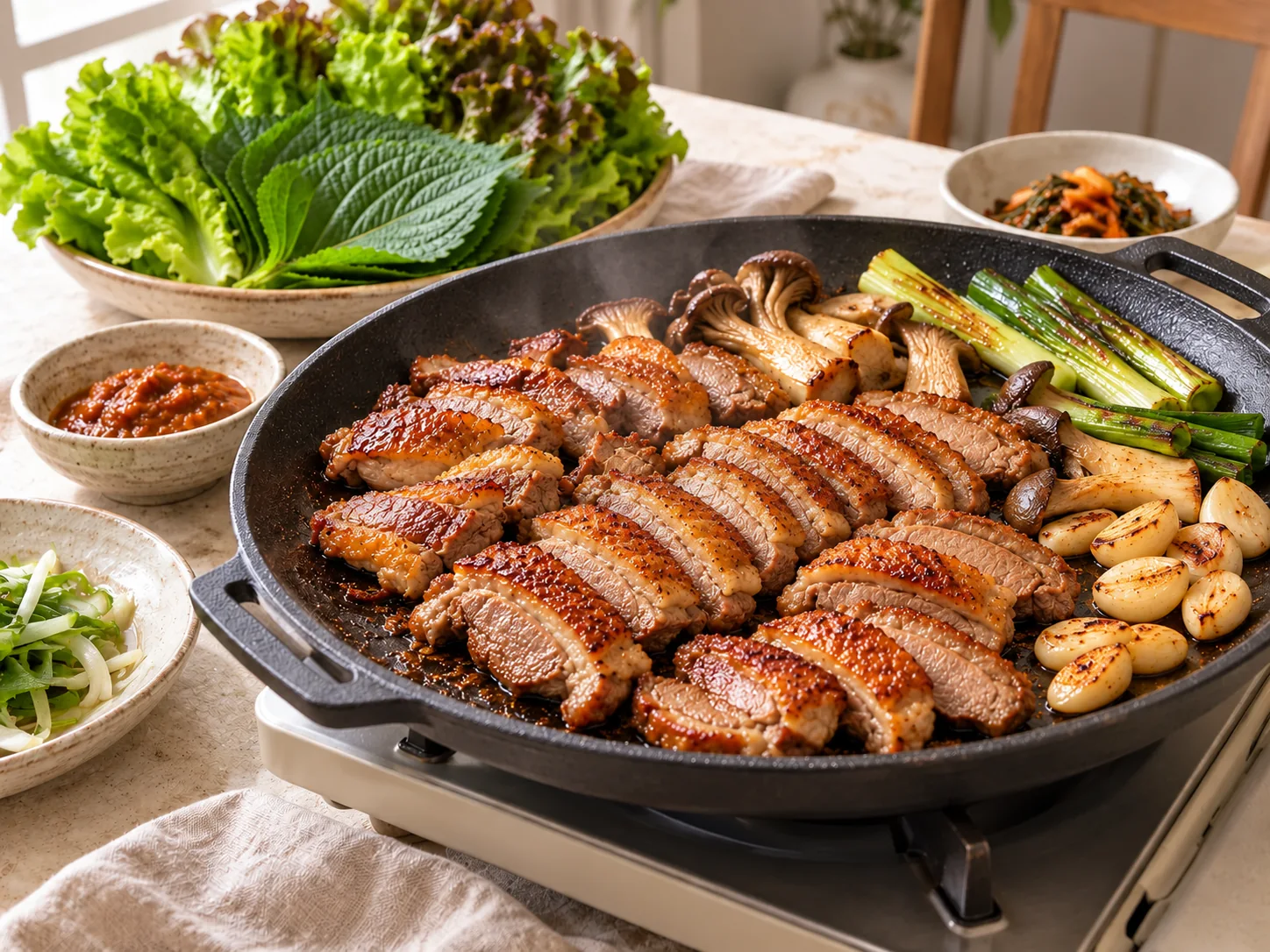
The Korean name can sound confusing if you expect a Western roast. Ori (오리) is duck; ori-roseu is commonly a plate of sliced duck, often with the skin on, grilled in a pan. The “roseu” in the name does not mean a whole roast bird brought to the table. In many restaurants the slices sizzle beside garlic, onion, potatoes or mushrooms, and everyone builds bites with greens and sauce as the pan cooks.
There is a pleasant informality to it. No one has to carve a large bird in the center of the table. A few pieces can brown at a time; vegetables take on some of the savory pan juices; a diner can choose a bare piece with salt or wrap it in lettuce with a small amount of doenjang-based sauce. The skin brings richness, so the fresh leaves and sharper condiments are not decoration. They make the plate feel like a complete meal.
Duck appears in other Korean preparations too. Ori-baeksuk is a whole duck gently simmered in broth, closer in mood to a gathering around a pot. Marinated or spicy grilled duck has another personality again. I keep those names separate because a reader looking for a mild pan-grilled dinner should not arrive at a heavily seasoned stir-fry without warning. “Grilled duck” is a useful English explanation for ori-roseu; “duck soup” and “spicy duck” should remain their own dishes.
One reason duck fits a boyangsik conversation is the shared effort. The cook or server watches the pan; diners take pieces as they are ready; the meal slows down enough for conversation. It is often chosen as a group outing rather than a solitary snack. The tradition is not limited to summer, and not every Korean diner would nominate duck as their first boyangsik. That variety is the point: the category is shaped by regional menus, family habits and what feels right on a given day.
For a home table, cook poultry thoroughly and keep raw meat separate from ready-to-eat leaves. That simple practice matters much more than any dramatic claim attached to the dish. Set out washed wraps, rice, a little sauce and perhaps a crisp vegetable side before the pan is hot. When the duck is cooked, people can make their own combinations without the cook leaving the table to assemble every bite.
Jeonbokjuk (전복죽): abalone porridge and a slower pace
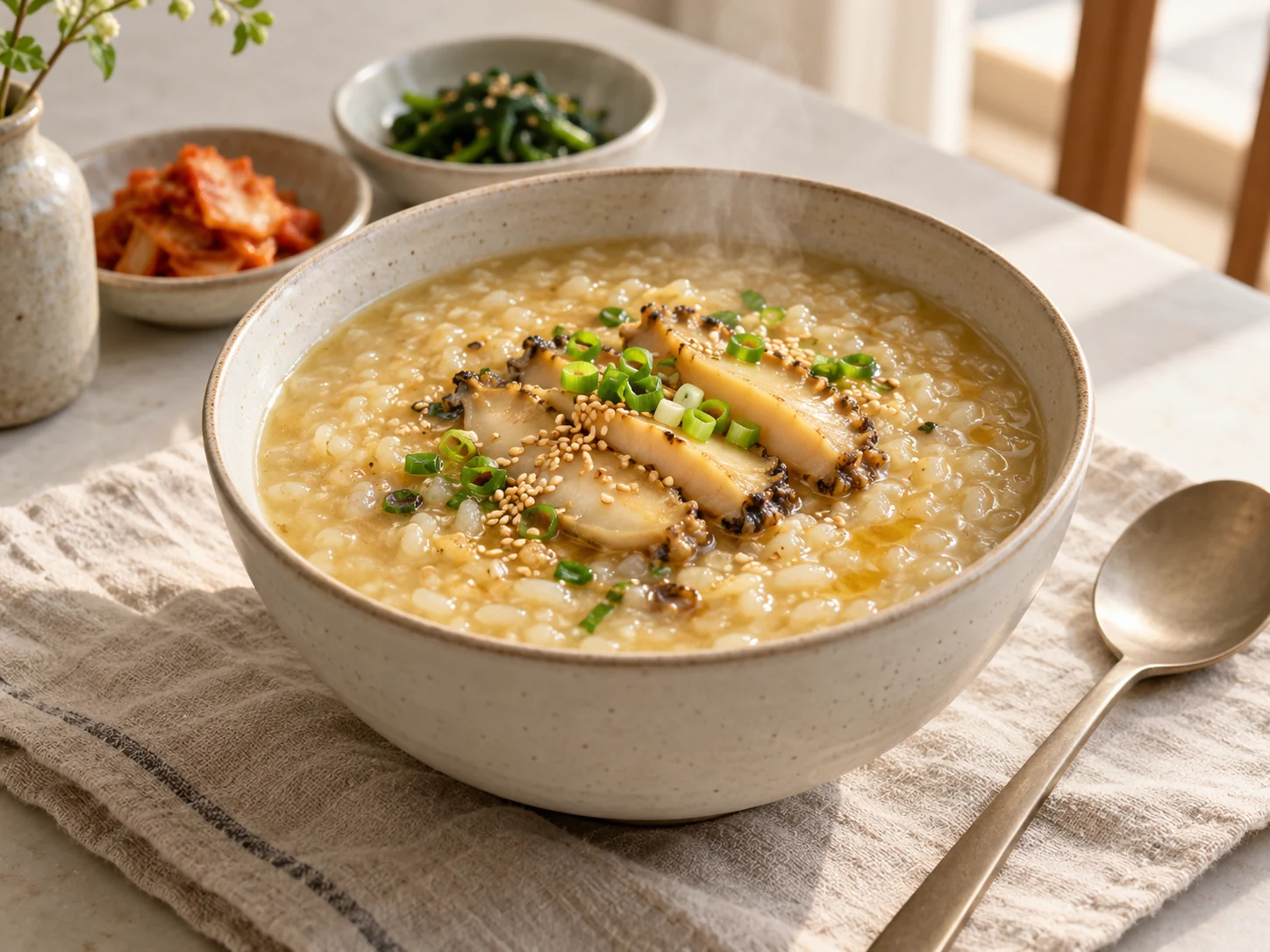
Not every food associated with care arrives sizzling or bubbling with a whole bird in it. Jeonbokjuk is abalone rice porridge. It is spoonable, soft and savory, with rice cooked until the grains yield to the broth. Pieces of abalone bring a distinct sea flavor and a gentle chew. This dish can feel like a pause: one bowl, one spoon, no hurry.
Abalone has a strong connection with Korea’s coastal food culture, especially Jeju and places where the shellfish is harvested or farmed. The bowl may be pale ivory, or it may take on a greenish golden tone when the abalone’s internal organs are used in a particular preparation. That color is a variation, not a sign that one bowl is more authentic than another. Some cooks finish with a little sesame oil; others keep the surface spare. The texture of the rice and the clean taste of the seafood are the center.
Juk (죽) is a broad family of Korean porridges, not a synonym for jeonbokjuk. There is pumpkin porridge, red bean porridge, pine nut porridge and simple rice porridge, each with its own ingredients and occasions. Jeonbokjuk is often talked about as a particularly thoughtful bowl because abalone takes preparation and can be a special purchase. That does not mean every porridge is boyangsik or that abalone is required whenever someone needs a gentle meal.
There are practical details worth knowing before treating this as a casual “throw everything in a pot” dish. Abalone needs cleaning; the edible flesh is separated from the shell; the rice and liquid need time to become porridge rather than a dry pilaf. If the internal organs are used, they must be handled and cooked appropriately. A seafood allergy is also a real consideration at a shared table. Clean and prepare the abalone before starting the porridge so you can give the pot your attention.
I find the cultural contrast beautiful: a special ingredient in a very modest shape. The bowl does not try to look lavish with many toppings. It asks the person eating to notice the rice, the sea and the care that went into making a soft meal. That is a different kind of abundance from a grill covered in duck, yet both belong in a wider Korean conversation about feeding someone well.
There is no single boyangsik menu
Samgyetang, eel, duck and abalone porridge make a useful introduction, not an exhaustive list. A simmered ori-baeksuk offers the duck in a completely different form from ori-roseu. Chueotang (추어탕), a loach soup with regional variations, is another dish that can appear in conversations about hearty food. Some households think of a long-simmered beef or chicken broth; a coastal restaurant may serve a seasonal fish soup. The details depend on place and family.
Cold food belongs in the summer picture too. Kongguksu (콩국수) uses a chilled soybean broth with noodles, and the result is creamy without needing dairy. It answers a different appetite from a steaming pot of samgyetang. Calling it the same kind of “restorative” dish can flatten what makes it interesting, but setting the two side by side shows how flexible Korean summer dining can be. One day calls for a hot, slow meal; another calls for something cool and nutty.
Restaurants also make their own specialties, including abalone added to chicken soup, charcoal-grilled eel, or soups that reflect local seafood. A menu may use a seasonal label to invite customers in, yet a name alone does not tell you the exact ingredients. Ask what is in the pot, whether a broth contains seafood, and how spicy a dish is. This matters especially when cooking for someone with an allergy, a food preference or a limited appetite.
There is room here for a vegetable-centered table without pretending that a bowl of greens is the same as a traditional eel dish. Seasonal vegetables, rice, beans and prepared banchan can make a deeply considered meal. If a family chooses a cold soybean noodle bowl instead of a meat soup, that is a real summer choice in Korea. We can describe it accurately and still honor the larger impulse behind boyangsik: pay attention to the person and the season.
The side dishes are part of the story
A photograph of a single bowl cannot show the whole table. Samgyetang might be accompanied by kimchi and a little salt to adjust the broth. Eel can come with ginger, garlic, leaves and rice. Ori-roseu asks for vegetables that will grill alongside the meat and fresh greens for wraps. Jeonbokjuk can stand mostly on its own, with a small crisp or pickled side to wake up the next spoonful. These details shape the experience as much as the featured ingredient.
In Korean dining, banchan (반찬) does more than fill empty space. A sharp kimchi bite changes how a mild soup tastes afterward. A fresh leaf makes rich grilled food feel brighter. A plain spoonful of rice gives you a pause between stronger flavors. That is why I would introduce a boyangsik table through contrast: warm and cool, rich and fresh, soft and crisp. There is no need to crowd the table simply to make it look generous.
For a small household, think in layers. Choose one main dish, one vegetable or leafy element, and one familiar side. If the main dish is soup, let the broth be the center. If it is grilled, set the clean accompaniments out before cooking so no one waits while the pan is hot. If it is porridge, give it a proper bowl and enough time to sit down. The care is in the pace and the fit, not a checklist of “power” ingredients.
Meals like these also show how Korean food carries memory without requiring every cook to repeat a single childhood scene. A parent might ask whether the rice is soft enough. Someone else may hand over the last perilla leaf or insist that another person take the hot bowl first. I cannot speak for every Korean home, and I do not want to invent a family story where none has been shared. What I can recognize is the familiar language of attention that surrounds a meal made for someone else.
Bringing the idea to an American table
Living away from Korea can change how a dish reaches the table. An Asian grocery may carry cleaned eel or frozen abalone, while a neighborhood market may have only chicken and duck. Ginseng may be easier to find as a packaged soup ingredient than as a fresh root. A recipe written for one small Korean chicken may need a different pot or a different bird where you live. Substitution can be practical, but it helps to know which ingredient gives a dish its name before changing it.
For samgyetang, glutinous rice and ginseng are part of the recognizable identity. For jangeogui, the eel and the way it is grilled matter; a piece of glazed salmon is a different dinner. For ori-roseu, sliced duck cooked at the table or in a pan matters more than an orange sauce associated with another cuisine. For jeonbokjuk, the rice-porridge texture and abalone are central. If an ingredient is unavailable, it is fine to cook a related meal and call it by its own name.
That naming care is part of my approach on TastefullyJOY. Korean food can sit beside American dinners, vegetables, lunchboxes and an occasional dessert without being swallowed by a vague wellness label. The site can celebrate a Korean tradition and still be honest about what a particular recipe actually makes. A good introduction should make the next cooking decision easier, whether the reader visits a Korean restaurant, buys ingredients, or simply learns a new word.
For guests who are new to these dishes, a short explanation often does more than a long speech. “This is chicken soup with rice inside the bird.” “Take a piece of eel with ginger in a leaf.” “The duck is sliced and grilled, so we can share from the pan.” “This porridge has abalone and a soft rice texture.” Then let people taste. The table itself will teach what the labels cannot.
A few useful distinctions
Is boyangsik a medical category?
No. On this page it is a cultural and culinary term. People may have personal beliefs about the foods, but eating a dish cannot be presented here as treatment, prevention or a guaranteed change in health. If a meal needs to fit a medical condition or allergy, individual advice belongs with a qualified professional.
Do people eat these dishes only on boknal?
No. The three boknal dates are strongly associated with summer food traditions, especially samgyetang, but restaurants and households enjoy many of these dishes throughout the year. The dates are a social cue, not a rule about when food is allowed.
Is ori-roseu the same as a whole roast duck?
No. Ori-roseu usually refers to sliced, skin-on grilled duck. It is often cooked on a pan and eaten with vegetables, wraps or dipping sauce. Whole duck soup, spicy marinated duck and Western roast duck should be described separately.
Does abalone porridge always have a green color?
No. Jeonbokjuk may be pale or take on a greenish tone depending on the preparation, particularly whether the abalone’s internal organs are included. The color alone does not establish quality or authenticity.
What if I do not eat meat or seafood?
Korean summer food is wider than the four animal-based examples here. A cold soybean broth with noodles, seasonal vegetables and rice can make a complete and welcome table. Ask about broths, garnishes and sauces if you need a vegetarian or vegan meal; a dish name alone does not reveal every ingredient.
The thought behind the table
When I hear boyangsik, I think about a meal chosen with someone in mind. It might be hot soup in summer, eel passed around a grill, duck cooked a few slices at a time, or porridge served quietly in a familiar bowl. The dishes do not need to make grand promises. They already have flavor, history and a way of bringing people to the table.
That is the spirit I want this Korean Kitchen Journal to hold: tell the name of the food clearly, give the reader a real sense of how it is eaten, and leave space for different families to make their own traditions. The best next step may be to try a restaurant dish, ask a relative what they remember, or cook one of these dishes at home. The conversation is part of the meal.